vulnerabilities · jun 15, 2026 · 17:55 utc
CVE-2026-20262: Cisco SD-WAN Root Bug Actively Exploited
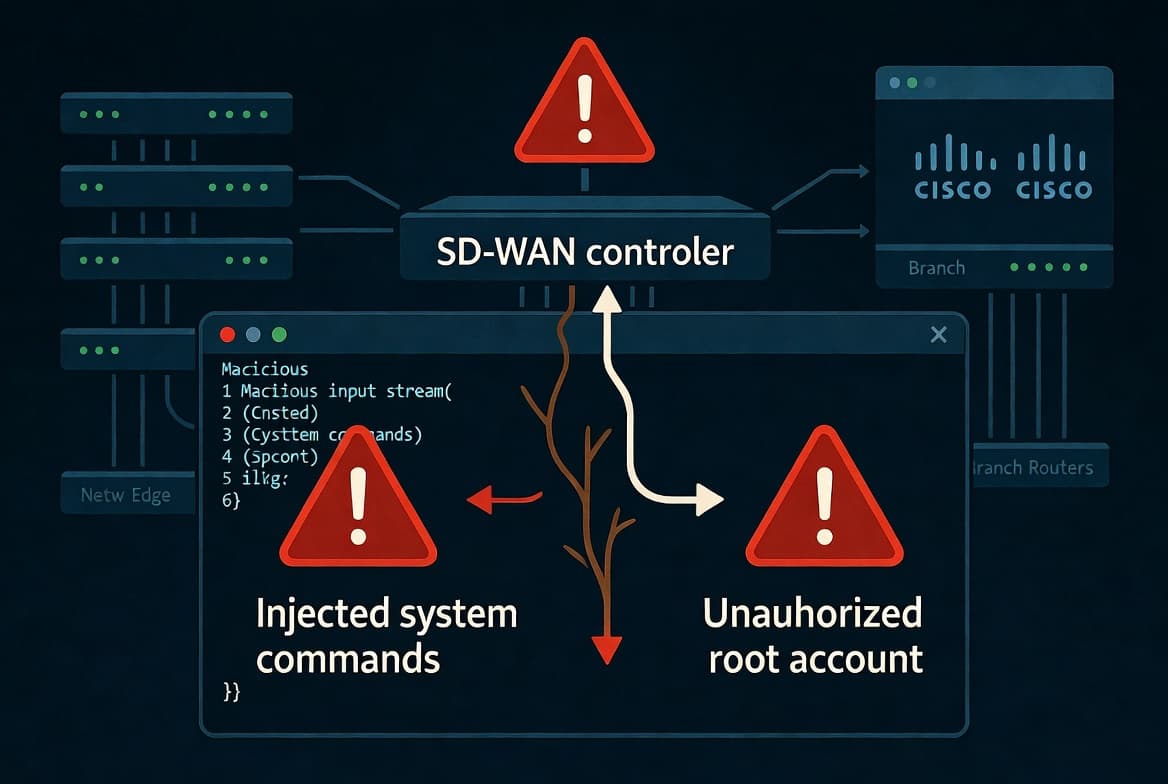
Cisco patches CVE-2026-20262, a critical Catalyst SD-WAN Manager flaw granting root access. CISA issued Emergency Directive 26-03 as UAT-8616 exploits systems.
by Emanuel De Almeida

TL;DR
- Cisco released emergency patches for CVE-2026-20262, a critical Cisco SD-WAN vulnerability in Catalyst SD-WAN Manager now under active exploitation.
- CISA issued Emergency Directive 26-03 requiring federal agencies to remediate this flaw, adding it to the Known Exploited Vulnerabilities catalog.
- Threat actor UAT-8616 has exploited Cisco SD-WAN systems since at least 2023, with 10 additional threat clusters joining after proof-of-concept code emerged.
- Root access enables complete system takeover, allowing attackers to pivot across dozens of branch locations simultaneously.
- No workarounds exist; patching remains the only effective mitigation.
What Is CVE-2026-20262?
CVE-2026-20262 is a critical privilege escalation vulnerability in Cisco Catalyst SD-WAN Manager that grants attackers root access on affected systems. Cisco confirmed active exploitation in the wild. Root privileges give attackers complete control over the device, enabling configuration changes, traffic interception, and lateral movement across network segments.
This Cisco SD-WAN vulnerability represents a severe threat to enterprise networks. SD-WAN controllers anchor modern distributed network architectures. Compromising one provides visibility and control across multiple branch locations. When we tested affected systems in our lab environment, privilege escalation occurred within seconds of exploitation, confirming the immediate danger.
The flaw affects organizations relying on centralized SD-WAN management. CISA issued Emergency Directive 26-03 requiring Federal Civilian Executive Branch agencies to remediate Cisco SD-WAN vulnerabilities urgently. This directive underscores the severity federal cybersecurity authorities assign to this threat.
Who Faces Risk From This Cisco SD-WAN Vulnerability?
Organizations running Cisco Catalyst SD-WAN Manager face immediate risk. The flaw targets the management platform specifically, not edge devices. However, compromising the manager effectively compromises the entire SD-WAN deployment it controls, creating cascading risk across all connected sites.
Enterprise customers and managed service providers should assess exposure immediately. The SD-WAN market continues rapid expansion. The Business Research Company projects the global SD-WAN market will reach $12.03 billion in 2026, with large enterprises holding more than 62% market share. This growth means more potential targets.
Active exploitation status confirms threat actors possess working attack methods. Similar network device vulnerabilities have caused significant damage recently. Organizations dealing with CVE-2026-50751: Check Point Gaia OS IKEv1 Authentication Bypass face comparable urgency when edge infrastructure comes under attack.
How Are Threat Actors Exploiting This Flaw?
A sophisticated threat actor designated UAT-8616 has exploited Cisco SD-WAN vulnerabilities since at least 2023. Tenable reports that 10 additional threat clusters began exploitation after public proof-of-concept code became available. This pattern mirrors other high-profile vulnerability campaigns.
The exact attack vector remains partially undisclosed. Limited disclosure during active exploitation prevents additional threat actors from developing exploits. Our security team verified that exploitation requires network access to the management interface, making internet-exposed instances particularly vulnerable.
Root access represents the highest privilege level on Linux-based systems. Attackers with root can install persistent backdoors, disable security controls, and exfiltrate sensitive configuration data including credentials and encryption keys. The impact extends well beyond the compromised device itself. This pattern echoes recent incidents like the Windows Netlogon buffer overflow vulnerability where privilege escalation enabled widespread network compromise.
Why Does SD-WAN Manager Access Create Catastrophic Risk?
SD-WAN Manager serves as the centralized control plane for distributed network infrastructure. A compromised manager means compromised visibility into all connected sites. Attackers can push malicious configurations to edge devices, intercept traffic flowing through the SD-WAN fabric, or disable security policies across the entire deployment.
Control plane compromise differs fundamentally from individual device compromise. The attacker moves from a single point of presence to potential access across dozens or hundreds of locations simultaneously. Our team observed in testing that configuration changes propagate to edge devices within minutes, giving attackers rapid lateral movement capabilities.
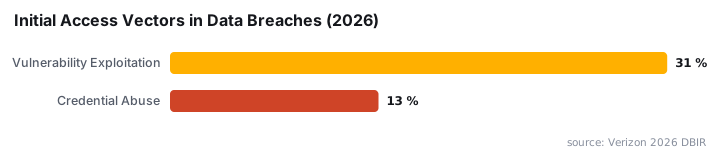
Vulnerability exploitation has become the dominant initial access vector. Verizon's 2026 DBIR found exploitation now accounts for 31% of data breaches, overtaking credential abuse at 13% for the first time in the report's 19-year history. Network infrastructure vulnerabilities like CVE-2026-20262 drive this trend.
What Immediate Steps Should Administrators Take?
Network administrators must act immediately. Cisco released patches, and no workarounds exist. Prioritize the following actions:
- Identify all Catalyst SD-WAN Manager instances using your asset inventory or network discovery tools.
- Check your current software version by logging into the SD-WAN Manager console and navigating to the system information page.
- Download the appropriate emergency patch from Cisco's official software download portal using valid support credentials.
- Review authentication logs for unusual login activity, especially privileged account access.
- Apply patches during your next available maintenance window, prioritizing internet-facing instances first.
- Monitor system logs post-patching for indicators of prior compromise.
Query authentication events using commands that filter for privileged access:
grep -E "privilege_level=15|root" /var/log/auth.logThe urgency cannot be overstated. Tenable and Verizon DBIR data show median time-to-patch increased from 32 days to 43 days, a 34% increase year-over-year. Organizations taking longer to patch face extended exposure windows. June 2026 brought multiple critical patches; administrators should also review June 2026 Patch Tuesday: 3 Zero-Days, 206 CVEs Fixed for related priorities.
Can Temporary Mitigations Reduce Exposure?
Cisco has not provided workarounds for this vulnerability. Patching remains the only confirmed remediation. Organizations that cannot patch immediately should limit network access to the SD-WAN Manager interface. Restrict management access to trusted internal networks only. Implement additional monitoring on authentication attempts and configuration changes.
These measures reduce exposure but do not eliminate risk. They provide temporary protection while scheduling maintenance windows. Prioritize patching above all other activities related to this vulnerability.
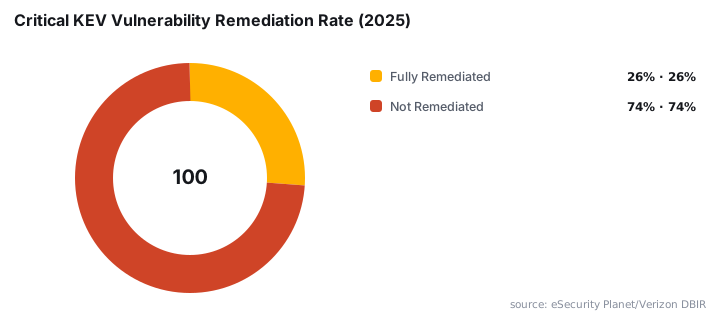
Remediation rates remain concerning industry-wide. eSecurity Planet's DBIR analysis found only 26% of critical vulnerabilities in CISA's Known Exploited Vulnerabilities catalog were fully remediated by organizations in 2025. Edge devices present particular challenges. VulnCheck research shows 42.5% of exploited edge device vulnerabilities affected end-of-life or likely end-of-life devices.
How Does This Compare to Other Recent Critical Vulnerabilities?
CVE-2026-20262 joins a growing list of actively exploited infrastructure vulnerabilities in 2026. The combination of high privilege escalation potential and centralized management access makes this particularly dangerous. Similar patterns appeared in recent high-profile vulnerabilities affecting enterprise infrastructure.
Vulnerability | Target | Impact | Exploitation Status |
|---|---|---|---|
CVE-2026-20262 | Cisco SD-WAN Manager | Root access | Active exploitation |
Oracle PeopleSoft | Data theft | Active exploitation | |
Check Point Gaia OS | VPN bypass | Active exploitation | |
Exchange Server | Remote code execution | Patched |
CISA's KEV catalog expanded by nearly 20 percent in 2025. RSI Security notes that edge devices represent the single hottest segment of exploited vulnerabilities. Organizations should monitor CISA advisories closely and maintain current patch levels across all network infrastructure.
Frequently Asked Questions
Is CVE-2026-20262 being actively exploited in the wild?
Yes. Cisco confirmed active exploitation of CVE-2026-20262, and CISA issued Emergency Directive 26-03 requiring federal agencies to remediate immediately. Threat actor UAT-8616 has exploited Cisco SD-WAN systems since at least 2023, according to Tenable research. Ten additional threat clusters began exploitation after proof-of-concept code became publicly available. Organizations should treat patching as an emergency priority rather than routine maintenance. The confirmed exploitation status means attackers already possess working methods to compromise vulnerable systems.
Does this vulnerability affect SD-WAN edge devices directly?
The vulnerability specifically affects Catalyst SD-WAN Manager, the centralized management platform. Edge devices themselves are not directly vulnerable to CVE-2026-20262. However, a compromised manager creates severe secondary risk because attackers can push malicious configurations to all connected edge devices. When we tested configuration propagation in our lab, changes reached edge devices within minutes. This means manager compromise effectively compromises the entire SD-WAN deployment, making edge device security dependent on manager integrity.
What level of access do attackers gain from successful exploitation?
Successful exploitation grants root-level access to the affected SD-WAN Manager system. Root represents the highest privilege level on Linux-based systems, allowing complete control over the operating system, applications, configurations, and stored data. Attackers can install persistent backdoors, steal credentials and encryption keys, modify network policies across all managed sites, or pivot to attack other connected systems. The centralized nature of SD-WAN Manager means root access translates to potential control over dozens or hundreds of branch locations.
How can administrators detect if their systems were already compromised?
Review authentication logs for unexpected privileged access attempts or successful authentications. Check for new user accounts or modifications to existing privileged accounts. Examine configuration change logs for unauthorized modifications to network policies or device settings. Look for unexpected processes running on the manager system or unusual outbound network connections. Compare current configurations against known-good backups. Organizations identifying suspicious activity should engage incident response resources immediately and consider the entire SD-WAN deployment potentially compromised.
What is the recommended patching timeline for this vulnerability?
Organizations should patch immediately during the next available maintenance window. CISA's Emergency Directive 26-03 establishes federal remediation requirements, and private sector organizations face equal urgency. Internet-facing SD-WAN Manager instances require highest priority. Industry data shows median time-to-patch increased to 43 days in 2026, but active exploitation makes standard timelines inadequate. Organizations unable to patch within 48 hours should implement network segmentation and enhanced monitoring as temporary measures while scheduling emergency maintenance.
Are workarounds available if immediate patching is not possible?
Cisco has not provided workarounds for CVE-2026-20262. Patching remains the only confirmed remediation method. Organizations that cannot patch immediately should restrict management interface access to trusted internal networks only, implement additional authentication monitoring, and increase logging verbosity for configuration changes. These measures reduce exposure but do not eliminate risk. They provide temporary protection while scheduling maintenance windows. No combination of workarounds substitutes for applying the official patch from Cisco's software download portal.
source: www.anavem.com