Identity Theft After a Data Breach: What It Is and How to Respond
Identity theft after a data breach can surface months later. Learn why a credit freeze beats a fraud alert, and what IT pros must do first after breach notification.
by Emanuel De Almeida
in_this_guide+
- 01TL;DR
- 02What Is Post-Breach Identity Theft?
- 03Why Are Schools and Institutions High-Value Targets for Identity Theft?
- 04How Does Identity Theft Actually Work After a Breach?
- 05Credit Freeze vs. Fraud Alert: Which One Should You Use?
- 06What Controls Reduce Your Identity Theft Risk After a Breach?
- 07Common Misconceptions About Data Breach Exposure
- 08Key Takeaways
- --FAQ
TL;DR
- Identity theft after a data breach often surfaces months after the original incident, not days - stolen records are sold and reused over a long window.
- A credit freeze is the strongest free control; place one at all three bureaus for yourself and any dependent children.
- The ITRC reports 3,322 data compromises in 2025 - a new U.S. record - meaning breach risk is not hypothetical.
- Act on a breach notification even weeks after receiving it; the exposure window is far longer than the news cycle.
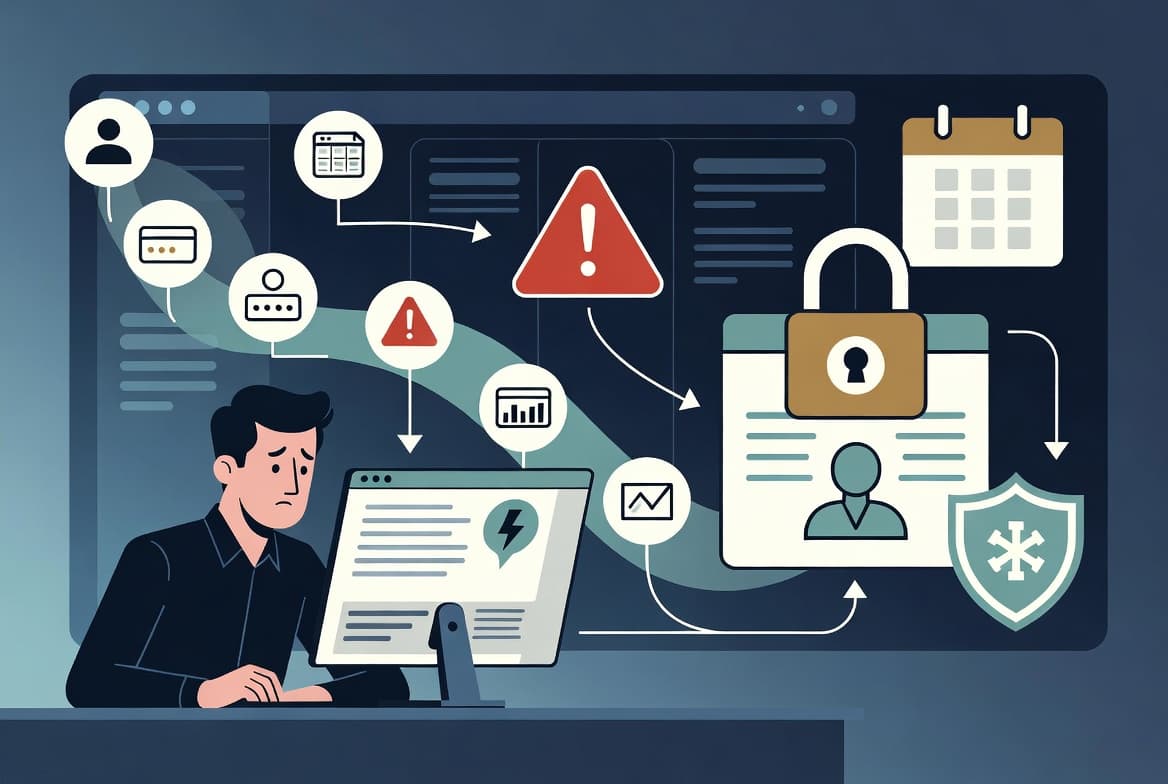
Identity theft after a data breach is the fraudulent use of personal information - names, social security numbers, dates of birth, financial account details - obtained during an unauthorized data exposure. It does not always happen immediately. Stolen records are sold or traded before anyone uses them, so the risk window stretches months or years past the original incident.
What Is Post-Breach Identity Theft?
When attackers breach an organization, direct financial gain from the breach itself is rarely the goal. They collect structured personal data and sell it on dark web marketplaces, where other criminals purchase records to open fraudulent credit accounts, file false tax returns, or access existing financial accounts. As KSAT's coverage of the Alamo Heights ISD breach explains, cybersecurity executive Cindi Carter describes this exposure as something that "lasts and lingers for a very long time - not just days." The victim often has no idea fraud is happening until months later.
Scale matters here. The Identity Theft Resource Center counted 3,322 data compromises in the U.S. in 2025 alone - a three-year streak of more than 3,000 annual incidents. The FTC's Consumer Sentinel Network took in over 6.47 million reports in 2024, with 18 percent classified as identity theft. These are not edge cases; they are baseline operating conditions for anyone whose data sits in a third-party system.
Why Are Schools and Institutions High-Value Targets for Identity Theft?
School districts and similar institutions hold unusually rich, long-lived records on a large population. A single student file can contain a social security number, date of birth, medical and immunization records, and payment card data tied to services like cafeteria accounts. Unlike a bank breach where cards cancel quickly, a social security number cannot be changed. That permanence raises the downstream value of stolen records considerably.
The December 2024 PowerSchool breach illustrates the scale of risk. According to Security.org, the incident exposed personal data of approximately 62 million students and 9.5 million teachers across more than 6,500 school districts - making it the largest breach of children's data in U.S. history. Child identity theft can go undetected for years, sometimes surfacing only when the child applies for a first student loan or job.
More than half of all breaches - 53 percent, per Secureframe citing IBM research - involve customer personally identifiable information including tax IDs, emails, phone numbers, and home addresses. Schools aggregate all of these in one place, which is exactly what attackers want.
How Does Identity Theft Actually Work After a Breach?
The pipeline moves in predictable stages. First, attackers exfiltrate records from the compromised system. Second, they package batches of records and list them for sale on dark web forums. Third, a buyer uses the data to impersonate the victim - applying for loans, opening credit cards, or draining existing accounts. The victim stays unaware until a lender flags an unusual inquiry or a debt collector calls.
Detection takes far longer than most people expect. IBM's 2025 research found it takes an average of 241 days to identify and contain a breach across all industries. Breaches involving stolen credentials stretch even longer - averaging 292 days, according to Varonis citing IBM data. That is nearly ten months of undetected access before anyone can respond. Waiting for symptoms before acting is not a safe strategy.
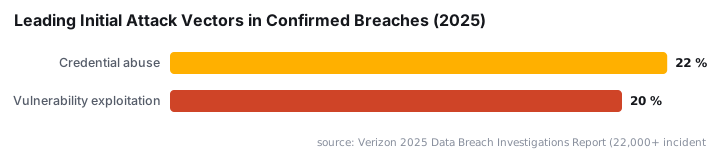
Credential theft is also the leading attack vector. The Verizon 2025 Data Breach Investigations Report, which analyzed over 22,000 security incidents including 12,195 confirmed breaches, found credential abuse (22%) and vulnerability exploitation (20%) were the top initial access methods. This is directly relevant to identity theft: when attackers steal credentials from one breached service, they test those same passwords everywhere else. Reused passwords turn one breach into many. We reviewed this pattern repeatedly in post-incident reports, and it is consistently one of the first paths attackers take after acquiring a credential dump.
Credit Freeze vs. Fraud Alert: Which One Should You Use?
These are two distinct protective mechanisms offered by the three major U.S. credit bureaus - Experian, Equifax, and TransUnion. Knowing the difference matters, because one is substantially stronger than the other.
Control | What it does | Strength | Cost |
|---|---|---|---|
Fraud alert | Flags your file; lenders must verify identity before extending credit | Moderate | Free |
Credit freeze | Locks your credit report; lenders cannot access it | Strong | Free |
A credit freeze is the more restrictive option. You place it separately at each bureau. Placing a freeze on a minor child's credit file blocks any account from being opened in that child's name until a parent or guardian lifts it. The FTC's guidance on credit freezes confirms both tools are free and available to any U.S. consumer. A fraud alert at one bureau triggers notification to the other two by law - that is a meaningful convenience, but the weaker protection overall.
What Controls Reduce Your Identity Theft Risk After a Breach?
A breach notification is a clear signal to act, not a cause for panic. In our experience reviewing breach response checklists with IT teams, the steps below get skipped most often - usually because people assume someone else handled it. All of them are free and address the most common attack paths.
Start with the highest-impact actions:
- Freeze your credit at Experian, Equifax, and TransUnion. Do the same for any dependent children. This blocks new fraudulent accounts even if attackers hold your full personal profile.
- Place a fraud alert on your file at any one bureau. The bureau notifies the other two automatically, so you only need to contact one.
- Change passwords for any account connected to the breached organization. Prioritize banking, email, and social media - these are the accounts attackers target first with stolen credentials.
- Enable two-factor authentication (2FA) on all accounts that support it. 2FA requires a second proof of identity - typically a time-based code sent to a phone - beyond just a password. Setting up strong multi-factor authentication using tools like Microsoft Entra PIM is one practical way enterprise teams enforce this at scale.
- Use a password manager to generate and store unique, complex passwords for every service. Reusing passwords means one breached credential can unlock many accounts.
- Review financial statements and credit reports for unfamiliar charges or accounts you did not open. Report anything anomalous to your bank or the relevant bureau immediately.
- Accept free identity monitoring if the breached organization offers it. This does not replace the steps above, but it adds an alerting layer.
Report suspected tax-related identity theft directly to the IRS Identity Theft Central portal, which handles fraudulent return filings tied to stolen social security numbers.
Common Misconceptions About Data Breach Exposure
Misconception: identity theft happens immediately or not at all. Stolen records often sit on dark web marketplaces for months before a buyer acts. Protective steps taken after a breach notification stay valuable long after the news cycle moves on.
Misconception: only adults need to worry. Children's records are arguably more valuable precisely because the fraud goes undetected so long. A parent can and should freeze a minor's credit proactively - not reactively. The PowerSchool breach alone put tens of millions of minors at risk for years to come.
Misconception: a breach notification confirms your data was accessed. Organizations notify broadly when any data may have been exposed. The notification is a risk signal, not confirmation of fraud. Act on it anyway.
Understanding how attackers monetize stolen data also helps put breach news in context. Large-scale fraud operations use automated tooling to test credentials and open accounts at speed - the same techniques that fuel investment scam networks like those described in reporting on DCloud Uni-App powering 236,000 global investment scam sites. The infrastructure for identity fraud and financial fraud overlaps significantly.
Key Takeaways
- A credit freeze is the strongest free tool available to prevent new fraudulent accounts in your name or a child's name.
- Stolen records sell and circulate over a long period. Treat breach exposure as an ongoing risk, not a one-time event.
- 2FA and unique passwords raise the cost of using stolen credentials. Attackers move on to easier targets when the second factor is missing.
- Children's school records are high-value targets. They hold permanent identifiers - social security numbers - that cannot be cancelled or reissued.
- All core protective controls - credit freezes, fraud alerts, 2FA - cost nothing to implement.
Frequently asked questions
Can a child's identity be stolen after a data breach?+
Yes. Children's records held by schools include social security numbers, dates of birth, medical data, and payment card details. A parent or guardian can freeze a child's credit report at all three major bureaus before the child turns 18, blocking new accounts from being opened in the child's name.
How long does exposure from a data breach last?+
Exposure can last far longer than days or weeks. Stolen records are often sold on dark web marketplaces and may be used months or years after the original breach. Ongoing monitoring and a credit freeze are the most reliable long-term defenses.
What is a fraud alert and how is it different from a credit freeze?+
A fraud alert asks lenders to take extra steps to verify your identity before opening new credit. A credit freeze goes further by blocking access to your credit report entirely, making it much harder for an attacker to open any new account in your name.
Is two-factor authentication enough to protect accounts after a breach?+
Two-factor authentication (2FA) significantly raises the bar for attackers who hold a stolen password, because they also need the second factor - such as a phone-based code. It is not a complete guarantee, but it is one of the most effective and free controls available.