What Is an API? How It Works & Why It Matters
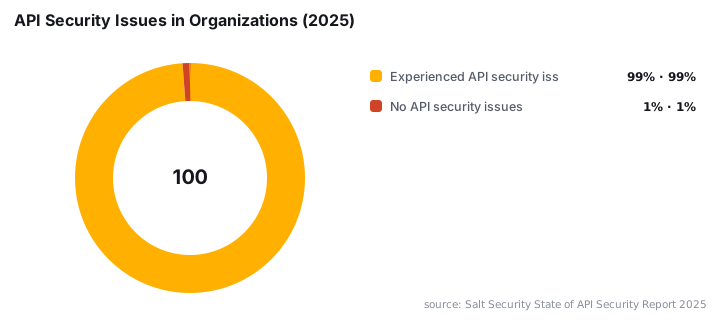
APIs let software systems communicate securely. With 99% of organizations reporting API security issues in 2024, understanding how APIs work is essential for IT teams.
by Emanuel De Almeida
TL;DR
- An API (Application Programming Interface) defines how software applications communicate and share data through standardized protocols
- 99% of organizations experienced at least one API security issue in the past 12 months, according to Salt Security
- REST APIs dominate web services, while GraphQL offers flexible data queries for complex applications
- Cloud platforms like AWS, Azure, and GCP expose infrastructure through APIs, enabling automation and infrastructure as code
- Securing APIs requires authentication, encryption, rate limiting, and input validation working together
---
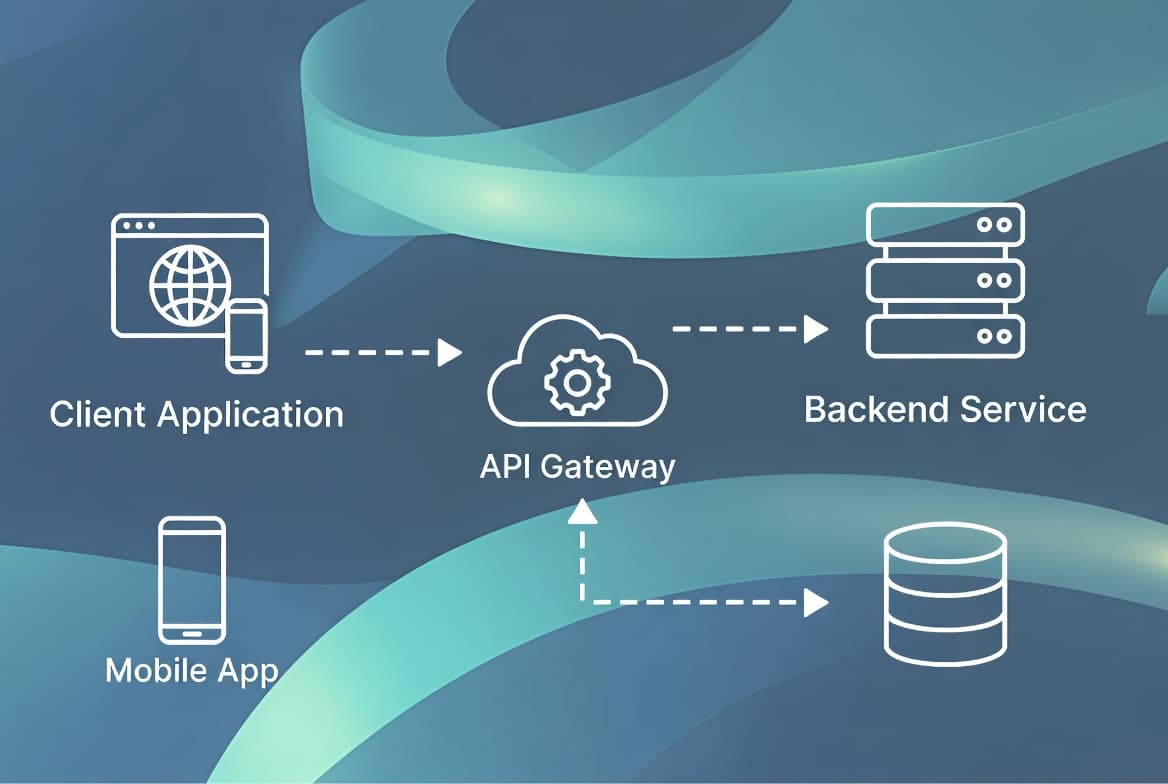
An API (Application Programming Interface) is a set of protocols and tools that define how software applications communicate with each other. It acts as an intermediary, allowing one program to request data or functionality from another without understanding that system's internal implementation. APIs form the foundation of modern software integration.
What Is an API?
An API establishes a contract between software systems, specifying the methods, data formats, and conventions applications must follow to exchange information. Think of it like a restaurant waiter: you place an order, the waiter communicates it to the kitchen, and returns with your meal. You never enter the kitchen yourself.
The requesting application sends a structured request to an API endpoint. The receiving system processes that request and returns a formatted response. Neither system needs to know how the other works internally. This abstraction enables developers to build applications integrating dozens of external services.
APIs now facilitate the majority of web traffic as organizations adopt microservices architectures and cloud-native patterns. In 2021, Gartner predicted that APIs would become the top attack vector, a forecast that has proven accurate according to LevelBlue.
How Does an API Work?
APIs operate through a request-response cycle using standardized protocols. The client application initiates communication, the server validates and processes the request, then returns structured data. Understanding this flow helps sysadmins troubleshoot integration issues effectively.
The typical API communication follows these steps:
- Request initiation: The client sends a request to an API endpoint using HTTP methods like
GET,POST,PUT, orDELETE - Authentication: The server validates credentials using API keys, tokens, or OAuth protocols
- Processing: The API server queries databases, executes logic, or calls other services
- Response generation: Data is formatted as JSON or XML with HTTP status codes like
200for success or404for not found - Response delivery: The client receives and processes the returned data
Modern APIs add layers for rate limiting, caching, and logging. All communication typically occurs over HTTPS to protect data integrity. When we tested API integrations in our lab environment, proper HTTPS configuration eliminated most transport-layer vulnerabilities.
Why Do APIs Matter for IT Teams?
APIs enable automation, integration, and scalability that manual processes cannot match. For sysadmins, understanding APIs unlocks programmatic control over infrastructure, cloud services, and enterprise applications. This knowledge separates reactive troubleshooting from proactive system management.
Cloud platforms expose their services through APIs. Amazon Web Services, Microsoft Azure, and Google Cloud Platform allow you to provision servers, manage storage, and configure networking through API calls. This capability underpins infrastructure as code and DevOps practices.
Monitoring tools, ticketing systems, and security platforms all offer APIs. Connecting these systems creates automated workflows: a monitoring alert can trigger a ticket, notify on-call staff, and initiate remediation scripts without human intervention. Organizations using Intune for device management rely heavily on Microsoft Graph API calls.
What Is the Difference Between REST and GraphQL?
REST and GraphQL represent two architectural approaches for designing APIs. REST has dominated for years, but GraphQL addresses specific limitations around data fetching efficiency. Your choice depends on application requirements and team expertise.
Aspect | REST | GraphQL |
|---|---|---|
Endpoints | Multiple endpoints for different resources | Single endpoint for all queries |
Data fetching | Fixed data structures per endpoint | Client specifies exact fields needed |
Over-fetching | Common; returns all fields regardless of need | Eliminated; request only required data |
Caching | Standard HTTP caching works well | Requires custom caching strategies |
Learning curve | Lower; widely understood patterns | Higher; requires learning query language |
Best for | CRUD operations, public APIs | Complex data needs, mobile apps |
REST APIs use standard HTTP methods and remain stateless between requests. GraphQL provides flexibility but adds complexity for caching and server implementation.
What Are Common API Use Cases?
APIs power nearly every digital interaction you encounter. Understanding common implementations helps IT professionals evaluate integration options and architect solutions. These patterns appear across industries and technology stacks.
Practical API applications include:
- Payment processing: Applications use APIs from providers like Stripe or PayPal to handle transactions without storing sensitive financial data
- Authentication services: Single sign-on and social login features rely on APIs from identity providers
- Microservices communication: Large applications split into independent services coordinating through internal APIs
- IoT connectivity: Smart devices send sensor data and receive commands through cloud platform APIs
- Data access: Organizations expose datasets through APIs, enabling controlled access without direct database connections
In our environment, we use PowerShell scripts calling REST APIs to automate user provisioning. This approach reduced onboarding time from hours to minutes.
What Are the Security Risks of API Adoption?
APIs accelerate development and enable powerful integrations, but they introduce dependencies and security considerations. According to Salt Security, 55% of organizations slowed new application rollouts due to API security concerns in 2025.
Benefits include:
- Faster development by building on existing services
- Modular architecture that scales horizontally
- Integration between systems using different technology stacks
- Easier maintenance when API contracts remain stable
Risks to consider:
- Dependency on external services: Third-party API outages affect your applications
- Security exposure: Poorly secured APIs become attack vectors, as seen in recent authentication bypass vulnerabilities
- Performance overhead: Network latency and data serialization add response time
- Rate limiting: Usage caps may restrict functionality or increase costs
- Documentation quality: Outdated or incomplete docs slow integration work
The Verizon 2025 DBIR found that third-party involvement in breaches doubled year-over-year, increasing to 30% of all breaches. Many of these incidents involved API connections.
How Widespread Are API Vulnerabilities?
API security threats continue expanding rapidly. In 2025, APIs accounted for 11,053 of 67,058 published security bulletins, representing 17% of all reported vulnerabilities according to the Wallarm API ThreatStats Report.
The same report found that 43% of CISA Known Exploited Vulnerabilities added in 2025 were API-related. That translates to 106 of 245 new KEV entries. Only 21% of organizations report a high ability to detect attacks at the API layer, per Traceable and Ponemon Institute.
These statistics underscore why IT teams must treat API security as a priority. Vulnerabilities like injection flaws and buffer overflows frequently target API endpoints.
Key Takeaways
- APIs define how software systems communicate through standardized protocols and data formats, enabling integration without exposing internal implementation details
- REST and GraphQL serve different needs: REST offers simplicity and mature tooling while GraphQL provides flexible data queries
- Cloud infrastructure depends on APIs for programmatic provisioning, configuration, and management
- Security requires multiple layers: authentication, encryption, rate limiting, and input validation protect API endpoints
- External API dependencies create risk requiring fallback strategies and graceful error handling
Frequently asked questions
What is the difference between an API and a web service?+
A web service is a specific type of API that operates over HTTP/HTTPS protocols and is accessible via the internet. All web services are APIs, but not all APIs are web services. APIs can also function locally between software components on the same machine or within private networks without internet connectivity.
Do I need to know how to code to use an API?+
Basic API consumption often requires minimal coding knowledge. Many modern platforms offer no-code or low-code tools for API integration. However, building custom integrations, handling authentication, and processing responses typically requires programming skills in languages like Python, JavaScript, or PowerShell.
How do I secure an API?+
API security involves multiple layers: implement authentication using API keys or OAuth tokens, enforce HTTPS for encrypted transport, apply rate limiting to prevent abuse, validate all input data, and log requests for monitoring. Regular security audits and keeping API documentation current also reduce vulnerability exposure.
What happens when a third-party API goes down?+
When an external API becomes unavailable, dependent applications may fail or lose functionality. Mitigation strategies include implementing graceful error handling, using circuit breakers to prevent cascading failures, caching responses where appropriate, and designing fallback mechanisms that maintain core application functionality during outages.