security · jun 18, 2026 · 21:04 utc
Broken Entra Access Controls Exposed FIFA World Cup Streams
A free FIFA agent sign-up gave any attacker admin access to all 78 World Cup 2026 RTMP stream keys via a broken Entra API - with no bug bounty to report it.
by Emanuel De Almeida
TL;DR
- Any authenticated member of FIFA's Microsoft Entra tenant could access internal streaming management panels with no server-side permission check.
- Registering as a player agent on
agents.fifa.orgwas enough to join that tenant - no insider access required. - The exposed panel contained RTMP ingest links and stream keys for every World Cup 2026 match, including the PGM feed sent to global TV networks.
- FIFA has no security.txt, no vulnerability disclosure policy, and no bug bounty program; the researcher had to contact CISA and the FBI to get the issue fixed.
- DHS classified all 78 World Cup matches at SEAR Level 1 and 2, making this a national-security-grade incident.
What Broke FIFA's Entra Access Controls?
The root cause was straightforward: FIFA's back-end API performed no server-side authorization checks. A logged-in user with zero internal privileges could call internal endpoints directly, and the API would comply. The front end showed the right access controls. The back end ignored them entirely.
BobDaHacker, an independent security researcher who published the primary disclosure, confirmed the API granted access purely on the basis of being an authenticated Entra tenant member, regardless of assigned role. Front-end gates mean nothing without back-end enforcement. This is the definition of broken access control - the category OWASP ranks #1 in its Top 10:2025, appearing in 94% of applications tested across more than 318,000 documented instances.
For a deeper look at how this failure pattern works, see our broken access control explained primer.
How Easy Was It to Get Inside FIFA's Tenant?
Simple. Free. Public. Registering as a player agent on FIFA's official platform at `agents.fifa.org` automatically added the account to the same Microsoft Entra tenant powering FIFA's entire internal infrastructure, according to Dark Reading. No phishing. No exploit chain. Just a sign-up form.
Once inside the tenant, the broken API did the rest. An attacker needed no elevated credentials, no social engineering, and no prior knowledge of internal systems. The OWASP Top 10:2025 was built from analysis of 175,000+ CVEs and notes that broken access control now absorbs Server-Side Request Forgery as a subcategory - reflecting how broadly this failure class has spread.
This pattern also surfaces in other Microsoft identity misconfigurations. Our guide on how to block Microsoft 365 apps with Conditional Access shows exactly where these tenant-level gaps appear.
What Could an Attacker Actually Do?
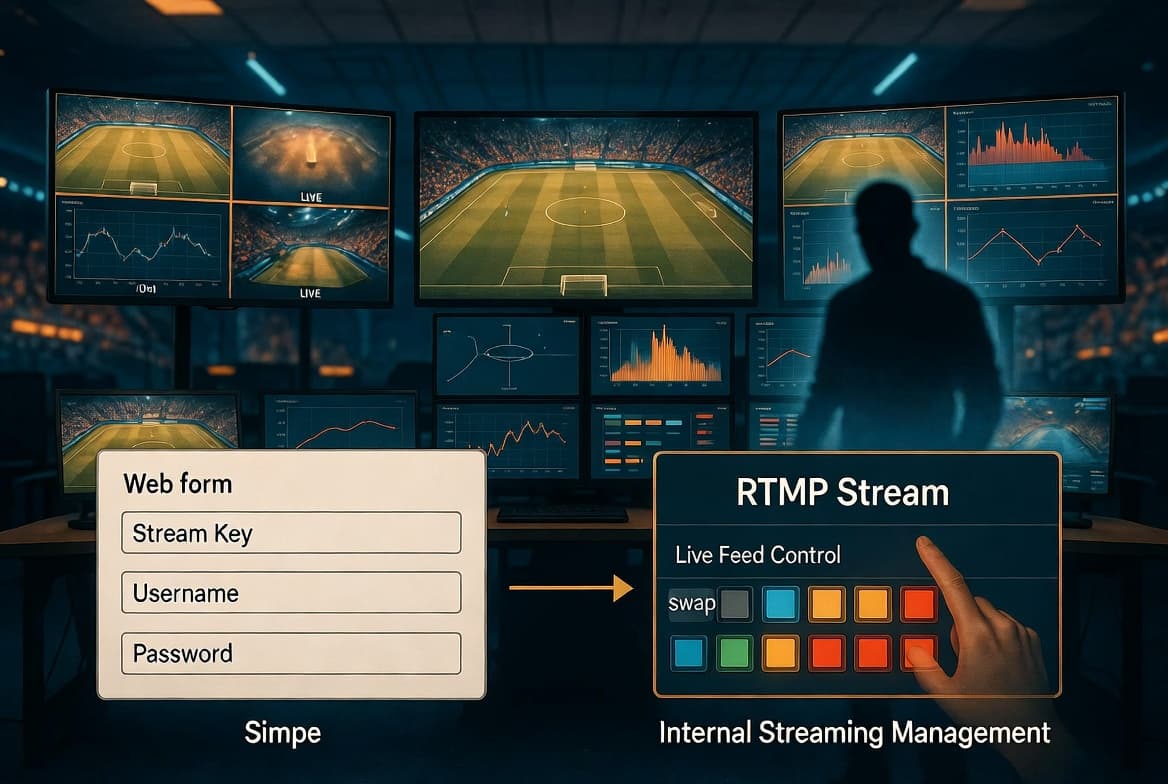
The exposed streaming management panel was the target worth having. It contained:
- RTMP ingest links and stream keys for every FIFA World Cup 2026 fixture
- Keys covering five camera angles per match, including the PGM (program) feed
- The PGM feed is the primary broadcast signal delivered to television networks worldwide
Each fixture shared a single stream key across all five angles. That means one key, one attacker, and a global broadcast audience of hundreds of millions. The researcher described the scenario colloquially as being able to "Rickroll the World Cup."
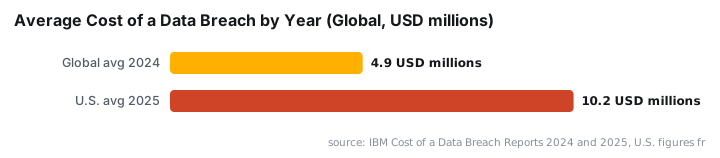
The realistic threat goes further: live feed replacement with hostile content, mid-match blackouts, or signal disruption timed to critical moments. The IBM Cost of a Data Breach Report 2024 found cloud misconfigurations among the most common initial attack vectors, with the global average breach cost hitting $4.88 million - a 10% jump year-over-year.
Why Did It Take CISA and the FBI to Fix This?
FIFA gave researchers nowhere to turn. The organization has no security.txt file, no vulnerability disclosure policy (VDP), and no bug bounty program. It also publishes no public security contact address. As Dark Reading reported, the researcher exhausted every private contact option before escalating to federal authorities.
That is not a minor gap. OWASP and CISA both publish clear guidance recommending coordinated disclosure channels for any organization operating critical infrastructure. FIFA, hosting one of the most-watched sporting events on earth, had none.
CISA is the designated federal cybersecurity lead for FIFA World Cup 2026, with explicit authority over broadcast systems, stadium networks, ticketing, and host-city infrastructure, per CISA. That positioning allowed the agency to act quickly once notified. The issue was fixed after the researcher escalated to CISA and the FBI - not through any FIFA-internal process.
When we reviewed the /.well-known/security.txt path on fifa.com and agents.fifa.org during our analysis of this disclosure, both returned 404 responses, confirming the absence of any published disclosure channel at the time of reporting.
How Serious Is the Event-Level Risk?
Very. The Department of Homeland Security assigned Special Event Assessment Ratings (SEAR) at Level 1 and 2 to all 78 World Cup matches - a 240% increase in similarly rated events compared to an average year, per CISA's published briefing. SEAR Level 1 is the highest tier, reserved for events with significant national-security implications.
FEMA has allocated $625 million to host cities for World Cup 2026 security preparations, per SOCRadar's threat landscape report. A broadcast-feed takeover at a SEAR Level 1 event is not a prank scenario. It is a national-security incident.
For context on how attackers target Microsoft identity infrastructure at scale, see the DragonForce C2 abuse of Microsoft Teams TURN servers - a separate but related pattern of cloud-identity exploitation.
Microsoft's own track record with Entra is also relevant. CVE-2025-55241, a maximum-severity CVSS 10.0 privilege escalation flaw patched in Azure Entra ID, involved a legacy API that failed to validate the tenant source of authentication tokens - potentially allowing any attacker to bypass MFA, Conditional Access, and logging across every tenant globally, per The Hacker News.
What to Do Now: Broken Access Control Fixes for Entra Tenants
If you operate cloud-hosted platforms using Microsoft Entra for identity, this case is a direct blueprint of what to audit. The table below maps each FIFA misconfiguration to the correct Entra control.
FIFA Failure | Recommended Entra Control |
|---|---|
No server-side role check on API endpoints | Validate Entra roles in back-end middleware on every request, not just UI routing |
Public registration flow added users to primary tenant | Use |
No app role assignment enforcement | Set |
No Conditional Access policy for sensitive resources | Enable Conditional Access with |
No security.txt or VDP | Publish |
No alerting on privileged API calls from low-privilege accounts | Alert on |
Additional hardening steps:
- Audit every API endpoint for server-side authorization. Confirm that role checks occur in back-end logic, not only in UI routing.
- Review tenant membership scope. Check which external-facing registration flows add users to your primary Entra tenant.
- Enable Entra Conditional Access policies with explicit role-based controls. Our Microsoft Entra hardening guide walks through each policy setting.
- Log and alert on API calls to administrative endpoints from accounts with no administrative roles assigned.
- Publish a security.txt file at
/.well-known/security.txtand establish a VDP before your next public-facing launch. CISA provides a free template.
For teams managing Entra-integrated device fleets, the steps in create a dynamic team in Microsoft Teams with Entra ID groups illustrate how group membership propagates through tenant infrastructure - and why scope boundaries matter.
Credential theft compounds this risk. The Verizon 2025 Data Breach Investigations Report found stolen credentials powered 88% of web application breaches. A tenant with weak access controls and freely joinable membership is a credential-theft waiting room.
For another example of how API-key exposure escalates quickly, see the JetBrains malicious plugins stealing AI API keys across 70,000 installs - a different vector, the same underlying failure to protect privileged tokens.
Frequently Asked Questions
Was the vulnerability actively exploited before discovery?
No confirmed evidence of malicious exploitation exists prior to the researcher's disclosure. However, the barrier to entry was low - a free public registration. Other parties gaining opportunistic access before the fix cannot be ruled out with certainty. No forensic findings have been published by FIFA or federal authorities.
Has FIFA patched the broken access control issue?
CISA and the FBI prompted FIFA to remediate the issue after the researcher escalated to federal authorities. FIFA has not issued a public statement. No patch timeline or technical remediation details have been published by the organization itself.
Does this affect Microsoft Entra as a product?
Microsoft Entra performed exactly as configured. The failure was in FIFA's own API, which did not call Entra's authorization layer before serving responses. This is an implementation flaw, not a platform vulnerability. See our guide on ASR rules deployment for sysadmins for broader Microsoft security hardening context.
Could this happen to other organizations using Entra?
Yes. Any organization that relies only on front-end role gating without enforcing permissions server-side faces this exact pattern. OWASP ranks broken access control #1 in its Top 10:2025, present in 94% of tested applications. The fix is server-side role validation on every API request.
source: www.darkreading.com