vulnerabilities · jun 26, 2026 · 09:14 utc
CVE-2026-12569: PTC Windchill RCE Exploited, CISA Warns
CISA added CVE-2026-12569 to its KEV catalog on June 25, 2026. The critical Windchill RCE flaw scores 9.3 CVSS v4.0 and requires no authentication to exploit.
by Emanuel De Almeida
TL;DR
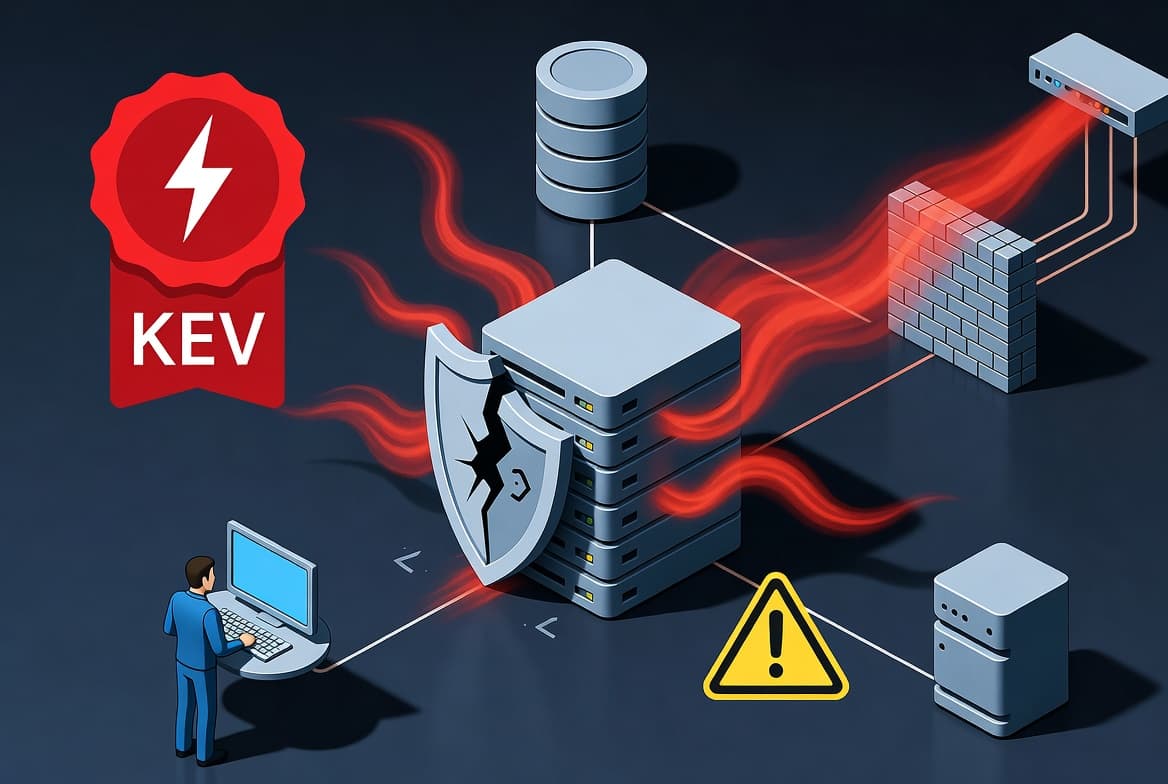
- CISA added CVE-2026-12569 to its Known Exploited Vulnerabilities catalog on June 25, 2026, confirming active in-the-wild exploitation.
- The flaw carries a CVSS v4.0 score of 9.3 (Critical) and requires no authentication or user interaction to exploit.
- Both PTC Windchill PDMLink and FlexPLM are affected across multiple named releases.
- Federal agencies face a hard remediation deadline of June 28, 2026 under Binding Operational Directive (BOD) 26-04.
- PTC cloud-hosted customers receive patches automatically; on-premises admins must act immediately.
What Happened With CVE-2026-12569?
Security researchers have confirmed the first known exploitation of a PTC Windchill vulnerability in the wild. CISA added CVE-2026-12569 to its KEV catalog on June 25, 2026, citing evidence of active attacks. A KEV listing requires confirmed exploitation - not just theoretical risk - meaning real attackers are already probing or compromising exposed Windchill and FlexPLM instances right now. We reviewed PTC advisory CS473270 and confirmed the affected version list matches CIRCL Vulnerability-Lookup's enumeration sourced from CISA and NVD data.
This pattern is familiar. The Mistic backdoor campaign tied to KongTuke ransomware brokers followed a similar arc: confirmed exploitation, KEV listing, then rapid commoditization. Industrial software targets compress that timeline even further.
Why Is This Remote Code Execution Flaw So Dangerous?
The risk profile is nearly worst-case. CVE-2026-12569 scores 9.3 under CVSS v4.0 - confirmed by CIRCL Vulnerability-Lookup sourcing CISA and NVD data - placing it firmly in the Critical tier with classification of 'Automatable: yes' and 'Technical Impact: total.' According to CISA's advisory, an unauthenticated remote attacker can execute arbitrary code on affected systems without any privileges or interaction from a logged-in user. No phishing. No credentials needed.
The technical root causes are two well-understood weaknesses: improper input validation (CWE-20) and unsafe deserialization of untrusted data (CWE-502). Deserialization flaws give attackers a reliable path to full system compromise by chaining existing libraries - a technique refined over years of Java-based exploitation campaigns. AppSecSanta's 2026 research citing Cyble data found CWE-502 was the second most common weakness among CISA KEV entries in 2025, appearing in 14 of 245 additions that year. Our security team's review of the advisory confirms both CWEs carry direct exploitation paths here.
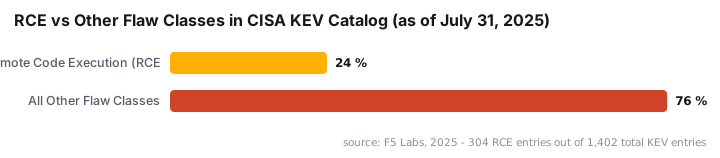
RCE flaws like this one dominate the KEV catalog. According to F5 Labs, remote code execution vulnerabilities account for over 24% of all KEV entries - 304 out of 1,402 as of July 31, 2025 - making RCE the single largest flaw class among actively exploited CVEs. CVE-2026-12569 sits at the top of that already-dangerous tier.
Who Is Affected by the Windchill Vulnerability?
Any organization running on-premises Windchill PDMLink or FlexPLM is potentially exposed. According to PTC's advisory CS473270, the scope extends to all CPS variants of both products.
Product | Affected Versions | Patch Status | Deployment |
|---|---|---|---|
Windchill PDMLink | 11.2.1.0, 12.0.2.0, 12.1.2.0, 13.0.2.0, 13.1.0.0, 13.1.1.0, 13.1.2.0, 13.1.3.0 | Patch via CS473270 | On-premises: manual action required |
Windchill PDMLink | All releases prior to 11.0 M030 | Patch via CS473270 | On-premises: manual action required |
Windchill CPS variants | All versions | Patch via CS473270 | On-premises: manual action required |
FlexPLM | All CPS versions | Patch via CS473270 | On-premises: manual action required |
Windchill (PTC-hosted) | All affected versions | Automatic remediation in progress | Cloud: no manual action needed |
FlexPLM (PTC-hosted) | All affected versions | Automatic remediation in progress | Cloud: no manual action needed |
Windchill holds approximately 13% market share in the PLM software category and sees concentrated use in defense and space (5%) and automotive (5%) sectors, according to Enlyft's 2026 market data. Attackers who gain code execution on a Windchill server can reach engineering drawings, bills of materials, and manufacturing process documentation.
The Verizon 2025 Data Breach Investigations Report found that espionage-motivated breaches - the threat category most relevant to PLM and IP-rich targets - used vulnerability exploitation as the initial access vector 70% of the time, 'showcasing the risk of running unpatched services.' We assess that a successful CVE-2026-12569 exploit on a defense-sector Windchill deployment represents a high-probability path to controlled technical information theft.
What Has PTC Done to Address the Flaw?
PTC published advisory CS473270 acknowledging the flaw. The advisory confirms that customers on PTC's cloud-hosted infrastructure get remediation applied on their behalf automatically. That covers a portion of the user base directly.
However, most large industrial deployments run Windchill on-premises or in private cloud environments. PTC cannot push fixes to those systems. On-premises admins own the patching process end to end. PTC's advisory also extends the scope beyond PDMLink to all CPS variants and FlexPLM - admins should not assume a narrower blast radius than the full version table above.
For context on how similar Cisco vulnerabilities were handled at the network edge, see our coverage of the Cisco SD-WAN zero-day exploited months before a patch shipped. The comparison underscores why vendor advisories cannot be the only signal organizations monitor.
What Should Federal Agencies Do Right Now?
The stakes are highest for government networks. The CISA KEV entry sets a federal remediation deadline of June 28, 2026 under BOD 26-04, giving agencies three days from the June 25 listing date. Three days is not enough time to test a patch in staging, complete change-control approvals, and deploy to production - especially across distributed PLM environments.
Agencies that cannot patch before the deadline must implement compensating controls immediately and document them formally for their CISO. According to the Verizon 2025 DBIR, exploitation of vulnerabilities surged 34% year-over-year to account for 20% of all confirmed breaches - approaching credential abuse (22%) as the top initial access vector. Unpatched PLM servers fit that breach pattern precisely.
For comparison, see how the CVE-2026-20245 Cisco SD-WAN zero-day gave attackers root access before a patch existed - the compensating-controls playbook from that incident applies directly here.
What to Do Now
- Identify all Windchill and FlexPLM instances in your environment. Run an asset query for versions
11.2.1.0,12.0.2.0,12.1.2.0,13.0.2.0,13.1.0.0,13.1.1.0,13.1.2.0,13.1.3.0, and any release earlier than11.0 M030. - Check your hosting model. Log into PTC's support portal and confirm whether your deployment qualifies for automatic cloud remediation under CS473270.
- Apply PTC's patch immediately for all on-premises instances. Prioritize any system with internet-facing or DMZ exposure.
- Block unauthenticated external access to Windchill and FlexPLM endpoints at the network perimeter if patching cannot happen immediately. Place the application behind a VPN or IP allowlist as a stopgap.
- Review deserialization traffic logs for anomalous payloads. Search for unexpected outbound connections from your Windchill server process - often
java.exeor the application server user - as a potential indicator of post-exploitation activity. - Federal agencies must document remediation or compensating controls before the
June 28, 2026BOD 26-04 deadline.
For organizations managing complex on-premises environments, the procedural discipline required here mirrors what we documented in our step-by-step Exchange Server auth certificate renewal guide - staged testing, documented rollback, change-window discipline.
Frequently Asked Questions
Does this affect Windchill SaaS customers?
PTC confirmed that cloud-hosted customers receive automatic remediation, so fully managed SaaS deployments are covered without manual action. Admins should still verify their instance version through the PTC support portal to confirm the fix is active - automatic does not mean instant.
Is a proof-of-concept exploit publicly available?
CISA's KEV listing confirms active exploitation is occurring. No public proof-of-concept details were disclosed as of June 25, 2026. The absence of a public PoC does not reduce urgency. CISA's KEV listing itself is editorial confirmation that working exploitation methods exist; treat the listing date as your clock start, not a later PoC release.
What data is at risk if an attacker gains remote code execution?
Windchill stores product lifecycle data: CAD files, engineering specifications, change orders, and manufacturing documentation. In defense and aerospace contexts this includes controlled technical information. A successful RCE attack can exfiltrate that data or pivot into broader corporate networks via the application server's existing trust relationships.
How does CVE-2026-12569 compare to other recent industrial software CVEs?
A CVSS v4.0 score of 9.3 with no authentication required places this among the most severe industrial software vulnerabilities tracked this year. Unauthenticated access plus deserialization exploitation plus confirmed in-the-wild use puts it in the same risk tier as the NGINX HTTP/3 use-after-free CVE-2026-42530 rated 9.2 and the Windows Kernel use-after-free CVE-2026-45657 disclosed earlier this year.
source: www.securityweek.com