tech · jun 29, 2026 · 16:00 utc
Africa Cybersecurity Center of Excellence: Mastercard 2026
Mastercard's pan-African cybersecurity hub launches in South Africa and Nigeria, covering 50 organisations with Recorded Future threat intel - backed by $12.6 bn invested since 2018.
by Emanuel De Almeida
TL;DR
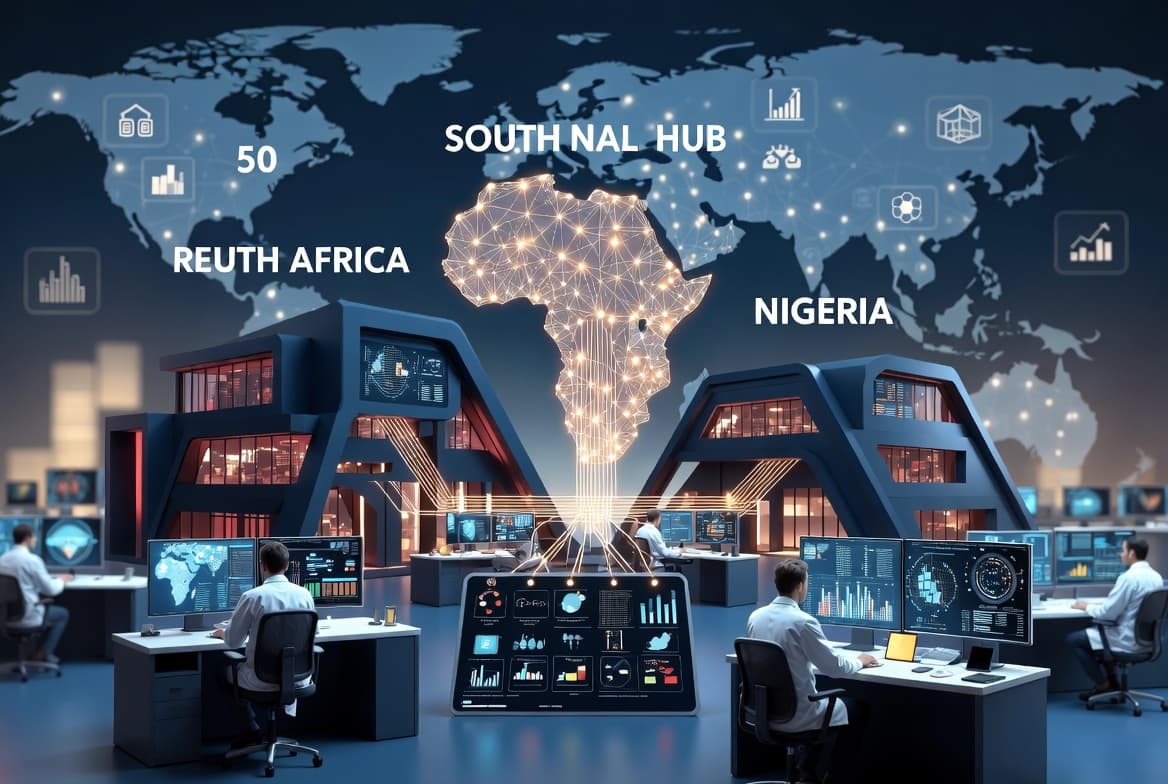
- Mastercard launched its Africa Cybersecurity Center of Excellence, beginning a phased rollout in 2026 across South Africa and Nigeria before expanding continent-wide.
- In year one, the Center will assess up to 50 organisations via an ecosystem cyber risk analysis and deploy an Africa-focused threat intelligence feed built by Recorded Future.
- Mastercard has invested more than $12.6 billion in cybersecurity innovation since 2018 and has backed over 20 cybersecurity startups globally. [[Source]](https://techafricanews.com/2026/06/29/mastercard-launches-africa-cybersecurity-center-to-strengthen-digital-trust/)
- South Africa recorded 17,849 ransomware detections in 2024 - the highest of any African country - followed by Egypt (12,281), per INTERPOL's Africa Cyberthreat Assessment Report 2025.
- Africa's digital economy is projected to reach $1.5 trillion by 2030 [[Source]](https://africabusinesscommunities.com/tech-24/mastercard-launches-africa-cybersecurity-center-of-excellence/), yet only an estimated 35 percent of cyber incidents on the continent are officially reported [[Source]](https://africabusinesscommunities.com/tech-24/mastercard-launches-africa-cybersecurity-center-of-excellence/).
Why Does Africa Need a Dedicated Cybersecurity Hub Right Now?
The Africa Cybersecurity Center of Excellence exists because the continent's digital growth has outpaced its defenses. Africa averaged 3,286 cyberattacks per organisation per week in Q1 2025 - a 39% year-over-year increase and the highest weekly attack rate of any region globally, per Check Point Research. That volume overwhelms security teams that are already understaffed.
Only an estimated 35 percent of cyber incidents are officially reported across Africa, according to Africa Business Communities. That reporting gap slows threat attribution and makes coordinated defense nearly impossible. The financial cost is real: an estimated USD 3 billion in cybercrime losses have been documented across Africa between 2019 and 2025, per INTERPOL's Africa Cyberthreat Assessment Report 2025.
When we reviewed Mastercard's press release alongside the INTERPOL data, the scale of underreporting stood out most sharply. A hub that aggregates threat intelligence regionally - rather than relying on globally averaged feeds - directly addresses why African-specific attack patterns so often go undetected until after the damage is done.
What Exactly Is Mastercard Launching?
The Africa Cybersecurity Center of Excellence is a pan-African initiative, not a single physical office. It starts in South Africa and Nigeria during 2026, then expands to additional markets in later phases.
The Center combines three operational pillars:
- Ecosystem cyber risk analysis - structured assessments covering up to 50 organisations in the first year.
- Africa-focused threat intelligence feed - developed by Recorded Future, a Mastercard company, to surface region-specific indicators of compromise.
- Government and private-sector engagement - direct collaboration with national bodies and financial institutions to build a shared defense posture.
This is infrastructure. It is built to persist, not to generate a press-cycle announcement. For context on how credential-stealing threats already target the region, see how Djinn Stealer exploits SimpleHelp vulnerabilities to steal cloud and AI credentials - exactly the class of threat an Africa-focused feed should flag early.
Who Is Behind the Announcement and Why These Two Countries First?
Mastercard CEO Michael Miebach personally announced the initiative during visits to both countries. The market selection follows the attack data. South Africa and Nigeria carry the continent's heaviest threat loads, and Miebach had already made direct commitments to both governments - to the Nigerian Government in Abuja and to the South African Government during G20 meetings in Johannesburg - as reported by IT-Online.
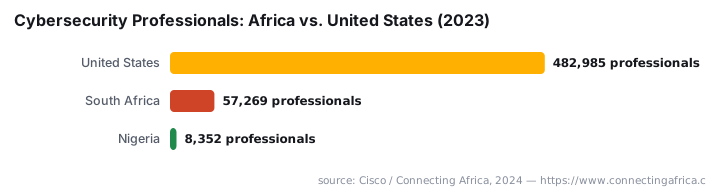
The talent deficit reinforces why external infrastructure is needed. Cisco research (via Connecting Africa) found Nigeria had only 8,352 cybersecurity professionals as of 2023 and South Africa 57,269 - compared to 482,985 in the United States. Nigeria lost around $2.4 billion to cyberattacks in the first ten months of 2024, and 71% of Nigerian organisations experienced ransomware in the prior year, per a Sophos report cited by CompTIA.
Who Is Affected and What Will the Center Actually Do?
The primary beneficiaries are African financial institutions, fintechs, telcos, and public-sector agencies - any organisation inside the continent's growing digital payments chain. In its first year, the Center will conduct an ecosystem cyber risk analysis covering up to 50 organisations.
Alongside that, a bespoke Africa-focused threat intelligence feed built by Recorded Future will surface region-specific indicators of compromise and adversary activity. Smaller organisations that lack in-house security teams benefit most from this arrangement.
They gain external threat context they could not build independently. Fewer than 300,000 cybersecurity professionals exist across all of Africa to protect one of the world's fastest-growing digital ecosystems, with a workforce gap of roughly 68,000 unfilled roles, per IT News Africa citing BCG and the Global Cybersecurity Forum. That shortage makes shared intelligence infrastructure essential rather than optional.
The ripple effects extend beyond finance. Africa loses an estimated 10% of its GDP to cyberattacks on average, per CyberCube citing the UN Economic Commission for Africa. A continent projected to grow GDP by 4.1% in 2025 cannot absorb that drag indefinitely.
How Serious Is Mastercard's Commitment to Cybersecurity Investment?
The numbers confirm the ambition. Mastercard has invested more than $12.6 billion in cybersecurity innovation since 2018 and has supported over 20 cybersecurity startups globally, according to TechAfrica News.
That capital base means the Africa Center enters the market with an established threat intelligence network already operational. Recorded Future - the threat intelligence firm Mastercard acquired - brings a global sensor network that the Africa-focused feed will draw from and localise. For background on how that acquisition repositions Mastercard's security stack, the Recorded Future acquisition context shows how intelligence-led defense is becoming standard across major technology vendors.
Mastercard treats cybersecurity as a core revenue-enabling function, not an overhead line. That distinction matters: it means the Center is funded from a strategic budget, not subject to the annual cost-cutting reviews that kill pilot programs.
What Should Your Organisation Do Before the 2026 Rollout?
Organisations operating in South Africa, Nigeria, or planning African expansion should take concrete steps now.
- Register interest with Mastercard's regional cybersecurity team before the 50-organisation ecosystem analysis fills in 2026.
- Audit threat intelligence subscriptions and identify gaps specific to African adversary groups. The Recorded Future feed targets exactly these blind spots.
- Fix incident reporting procedures. If your team does not log and escalate all security events, start now - your data contributes to the continent-wide picture.
- Map third-party and supply-chain dependencies in South Africa and Nigeria. Use a structured framework like NIST CSF 2.0 to score vendor risk against documented criteria.
- Contact your national CSIRT to confirm enrollment in any government-affiliated threat-sharing programs that may integrate with the Center's intelligence feed.
- Review privileged access controls. Active exploitation of infrastructure flaws - like the critical Splunk RCE CVE-2026-20253 currently under active attack - shows that unpatched internal tools are a primary entry point for the exact threat actors this Center will track.
Frequently Asked Questions
When will the Center expand beyond South Africa and Nigeria?
Mastercard confirmed a phased rollout beginning in 2026, starting with South Africa and Nigeria. Mastercard has not disclosed specific timelines or country names for subsequent phases. Organisations in other African markets should monitor Mastercard's official regional communications for expansion announcements.
What is Recorded Future's role in this initiative?
Recorded Future, which Mastercard acquired and operates as a subsidiary, is developing an Africa-focused threat intelligence feed specifically for the Center. This feed will surface regional threat actors, malware variants, and attack patterns relevant to African digital infrastructure - rather than relying on globally aggregated data that underweights Africa-specific activity.
Is this initiative only for large enterprises?
No. The ecosystem risk analysis covering up to 50 organisations includes smaller players without mature in-house security teams. The goal is a network effect - improving the weakest links in Africa's digital payments chain benefits every connected organisation, regardless of size.
How does this connect to government commitments?
CEO Michael Miebach made direct commitments to both the Nigerian Government in Abuja and the South African Government during G20 meetings in Johannesburg. The Center formalises those commitments into operational programs, giving governments a structured counterpart for public-private cybersecurity collaboration.
How does the Africa threat landscape compare between South Africa and Nigeria?
The table below summarises key indicators from INTERPOL's 2025 Africa Cyberthreat Assessment and Sophos/CompTIA data.
Indicator | South Africa | Nigeria |
|---|---|---|
Ransomware detections (2024) | 17,849 (highest in Africa) | Among top markets for dark-web activity |
Cybersecurity professionals (2023) | 57,269 | 8,352 |
Financial losses to cybercrime | Largest GDP-share exposure | ~$2.4 bn in first 10 months of 2024 |
Ransomware prevalence (organisations) | High enterprise targeting | 71% of organisations hit in past year |
Sources: INTERPOL Africa Cyberthreat Assessment 2025, Cisco / Connecting Africa, CompTIA citing Sophos.
Are investment scam threats also covered by the Center's scope?
The Center's mandate covers the broader digital payments ecosystem, which includes fraud vectors. Infrastructure-level scam campaigns - like those documented in DCloud Uni-App powering 236,000 global investment scam sites - represent exactly the category of threat that a regional intelligence feed can attribute faster than any single organisation acting alone.
source: news.google.com