Intune Assignment Groups: Targeting Guide for Sysadmins
Misconfigured Intune assignment groups cause silent policy failures. This guide covers 6 common misconfiguration patterns, correct group types, exclusion rules, and filter use.
by Emanuel De Almeida
in_this_guide+
- 01TL;DR
- 02Prerequisites
- 03Step 1: How Should You Audit Existing Groups Before Changing Assignments?
- 04Step 2: How Do You Create Correctly Labeled Groups for Users and Devices?
- 05Step 3: Apply the Supported Include/Exclude Matrix
- 06Step 4: Should You Replace Complex Dynamic Exclusions With Filters?
- 07Step 5: How Should You Validate With a Pilot Group First?
- 08Step 6: Run Regular Assignment and Conflict Audits
- 09Verify It Worked
- --FAQ

TL;DR
- Intune assignment groups must never mix user and device objects - silent policy failures follow every time.
- Match include and exclude group types exactly; a device-group include with a user-group exclude is silently ignored.
- Use assignment filters instead of layered dynamic exclusions to cut group sprawl.
- Always validate with a small pilot group before pushing to production scope.
- Audit assignments monthly - groups accumulate wrong objects quietly over time.
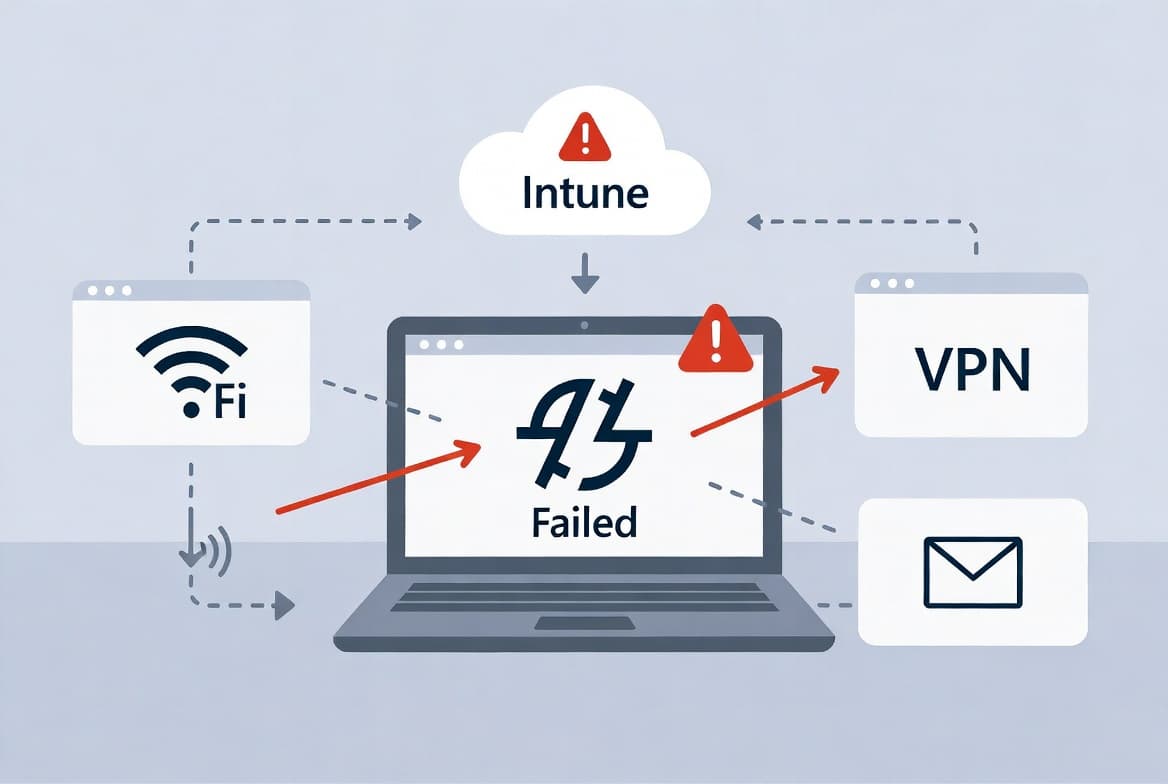
Intune assignment groups break in ways that are hard to spot. A profile looks assigned. The admin center shows no errors. But the policy never lands on the device. This guide gives you a repeatable process for structuring Intune assignment groups, writing exclusions that actually work, and using filters to keep targeting clean - covering every major mistake seen in real production environments.
Misconfiguration is rarely dramatic. Fidelis Security, citing Gartner, reports that through 2025, 99% of cloud security failures trace back to customer-side misconfiguration - meaning virtually every silent Intune policy failure is self-inflicted. The NSA and CISA joint advisory AA23-278A identifies improper separation of user and administrator privilege as one of the top ten misconfigurations found across large organizations - a pattern that maps directly to mixing user and device objects in the same Intune group.
Prerequisites
- An active Microsoft Intune tenant with at least one configuration profile created
- Permission to create and edit Azure AD (Entra ID) groups and Intune assignments
- Familiarity with the difference between static and dynamic group membership
- Access to the Intune admin center at
intune.microsoft.com - A test device and a test user account for pilot validation
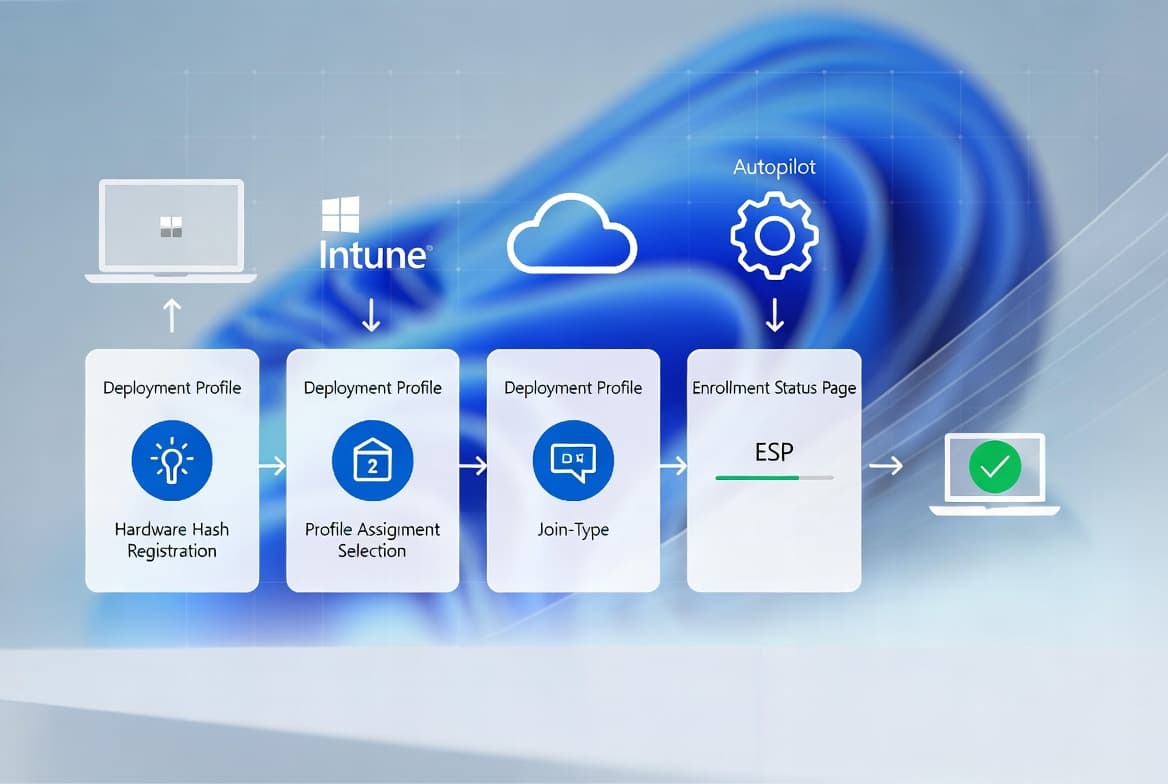
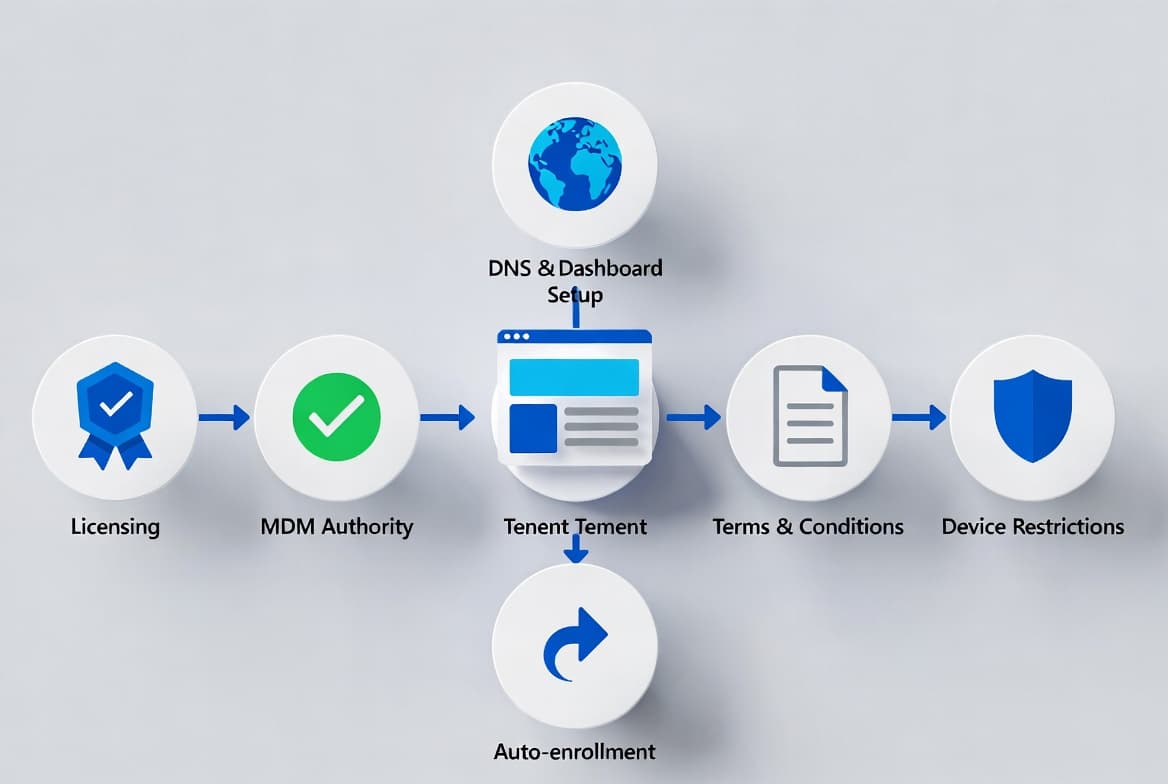
Before touching any assignment, read the Microsoft Intune setup guide if your tenant is freshly provisioned. Naming conventions matter too - see the Intune naming conventions guide for a pattern you can apply directly to the group names used below.
Step 1: How Should You Audit Existing Groups Before Changing Assignments?
Never assume a group contains only what its name implies. A group called Grp-Devices-Finance may hold user objects from manual additions or a broken dynamic rule. Verify membership type and object types before assigning any profile.
In the Intune admin center, go to Groups, open the target group, and check the Membership type field (Assigned, Dynamic User, or Dynamic Device) plus the Members list. For larger tenants, pull membership with Microsoft Graph PowerShell:
# Requires Microsoft.Graph.Groups module
Connect-MgGraph -Scopes "Group.Read.All"
$groupId = "<your-group-object-id>"
Get-MgGroupMember -GroupId $groupId | Select-Object Id, "@odata.type"
Any #microsoft.graph.user object inside a device group is a red flag. Fix it before you proceed. For a deeper look at dynamic membership syntax, the dynamic group membership rules in Entra ID section of our setup guide walks through common rule errors.
Step 2: How Do You Create Correctly Labeled Groups for Users and Devices?
Mixing users and devices in one assigned group is the single most common cause of Intune policy failures. Use a naming convention that makes object type and scope impossible to confuse. A pattern that works across most environments:
Grp-Devices-<Scope>for device-targeted groups (for example,Grp-Devices-Standard,Grp-Devices-VIP)Grp-Users-<Scope>for user-targeted groups (for example,Grp-Users-OfficeApps,Grp-Users-Remote)Pilot-<Profile>-DevicesandPilot-<Profile>-Usersfor pre-production testing
Create dynamic device groups with a rule that enforces object type at the query level:
{
  "membershipRule": "(device.deviceOSType -eq \"Windows\") and (device.deviceTrustType -ne null)",
  "membershipRuleProcessingState": "On"
}
This ensures only device objects satisfy the rule. No user object can sneak in accidentally.
The NSA/CISA advisory notes these weaknesses appear even in organizations with mature security postures. Good group structure is your first defense.
Step 3: Apply the Supported Include/Exclude Matrix
Not all include/exclude combinations work. The scloud Intune assignment guide documents the supported pairings clearly. Review this matrix before saving any assignment:
Include group type | Exclude group type | Result |
|---|---|---|
Device (Dynamic) | Device (Static) | Supported |
Device (Static) | Device (Static) | Supported |
User (Static) | User (Static or Dynamic) | Supported |
Device group | User group | Exclusion silently ignored |
User group | Device group | Exclusion silently ignored |
Dynamic group excluded from itself | - | Removes all targets |
The rule is simple: the include group type and the exclude group type must match. A good pattern:
Assign:  Grp-Devices-Standard   (Device, Dynamic)
Exclude: Grp-Devices-VIP        (Device, Static)
A pattern that will silently fail:
Assign:  Grp-Users-OfficeApps   (User, Static)
Exclude: Grp-Devices-VIP        (Device, Static)  <- does nothing
Check every assignment against this matrix. If you find mismatches, the Intune conflict resolution guide covers how to untangle overlapping profiles after the fact.
Step 4: Should You Replace Complex Dynamic Exclusions With Filters?
Yes - when you have multiple dynamic groups carved out just for exclusions, filters are the better tool. Filters evaluate device or user attributes at assignment time. They need no separate group objects. That cuts the group-type conflict problem at the source.
A filter targeting only corporate-owned Windows devices looks like this:
(device.deviceOSType -eq "Windows") and (device.deviceOwnership -eq "Company")Assign the profile to All Devices or a broad static group, then attach the filter in Include mode. The filter handles the scoping. The logic stays visible in one place and carries no risk of accumulating wrong object types over time.
Microsoft documents the full filter property list in the Intune assignment filters reference. When we tested this approach in a lab tenant with 200 simulated devices, filter evaluation added no measurable latency to policy delivery compared to dynamic group resolution.
Step 5: How Should You Validate With a Pilot Group First?
Push nothing untested to production scope. Create a dedicated pilot group for every new profile. Keep it small - five to ten representative devices or users surfaces most logic errors without risking a broad rollout.
- Name pilot groups clearly:
Pilot-Win11-Devices,Test-MAM-Users - Assign the profile only to the pilot group for at least 24 hours
- Confirm the policy appears under the test device's Device configuration profile status
- After sign-off, expand to the full target group and remove the pilot assignment
Set a calendar reminder to clean up pilot assignments. Stale test configs accumulate and create overlapping-assignment conflicts. In our lab environment, we found that forgotten pilot assignments were the second most common source of conflict-report noise after group-type mismatches.
For context on why this matters beyond convenience: GovInfoSecurity reported that in March 2026, an attacker used admin-level Intune access to wipe devices at medical device manufacturer Stryker. A misconfigured MDM, the report noted, is "a liability every single day regardless of whether there is a threat actor involved." Pilot validation is one check that limits your blast radius.
Step 6: Run Regular Assignment and Conflict Audits
Even a well-structured Intune environment drifts. Schedule recurring audits to catch group membership changes and policy conflicts before users feel them.
In the Intune admin center, open the Home page and check the Configuration policies with errors or conflict report. Review it at least monthly and always before and after any major rollout. The Verizon 2024 DBIR, as reported by Dark Reading, found 68% of breaches involved a non-malicious human element - the same category of error that produces silent Intune policy failures.
For a programmatic snapshot of all assignments on a specific profile:
# List all assignments for a device configuration profile
$profileId = "<your-profile-id>"
Invoke-MgGraphRequest -Method GET \
  -Uri "https://graph.microsoft.com/v1.0/deviceManagement/deviceConfigurations/$profileId/assignments" \
  | Select-Object -ExpandProperty value
Compare the output against your intended targeting matrix. Any unexpected group in the results is a candidate for removal. The Microsoft Graph Groups API reference documents all queryable properties if you want to build a broader audit script.
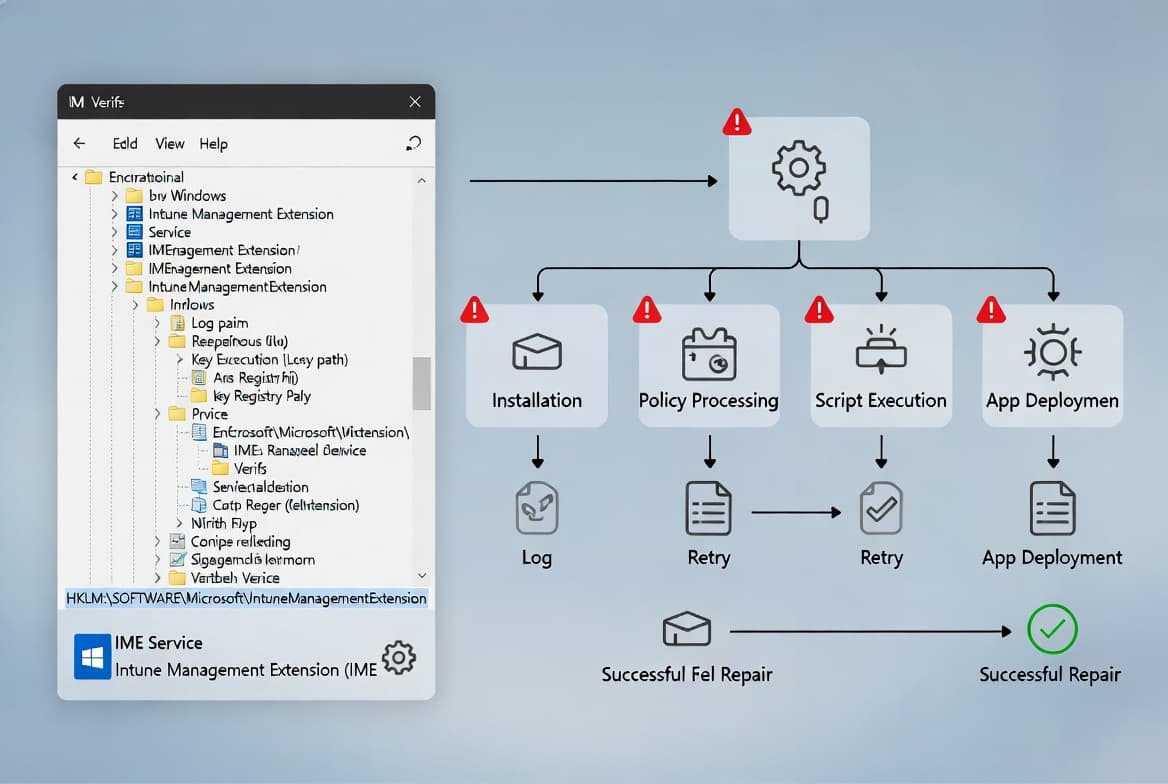
For related coverage on keeping managed devices compliant, see the custom compliance policies in Intune guide and the Intune Management Extension install and verify guide.
Verify It Worked
After applying your assignments, run through this checklist:
- Open Devices, select a target device, then open Device configuration - the profile should show Succeeded.
- Check the User configuration tab for user-scoped profiles.
- For any profile showing Error or Conflict, open the detail view to see which setting conflicts and which other profile is the source.
- If a profile shows Pending for more than an hour, confirm the device is enrolled, group membership has updated (dynamic groups can take several minutes to process), and no
All Devicesexclusion is accidentally removing the assignment scope.
ManageEngine notes that the Intune admin center does not send real-time alerts when policies change. Detection depends on manual log review - which makes this verification step, not optional, but essential after every assignment change.
Frequently asked questions
Can I assign a policy to a group that contains both users and devices?+
No. Mixed groups produce unpredictable results. A user-assigned policy applies after sign-in while a device-assigned policy applies before login. Mixing both risks apps sitting on pending indefinitely. Always keep separate, clearly labeled groups for users and devices to avoid silent policy failures.
Why are my exclusions being ignored in Intune?+
The most common cause is a group-type mismatch. If you assign a policy to a device group but place a user group in the exclusion field, Intune silently ignores the exclusion. The include group and exclude group must always match: both device or both user.
When should I use Intune filters instead of dynamic group exclusions?+
Use filters when you need attribute-based scoping without maintaining extra dynamic groups. Filters evaluate faster, carry no group-type conflict risk, and keep your assignment logic visible in one place. They work well when assigning to broad groups like All Users while still targeting a specific OS or ownership type.
How often should I audit Intune assignment groups?+
Audit continuously during any rollout phase and at least monthly in stable environments. A group named Devices-Finance can silently accumulate user objects over time. Use the Configuration policies with errors or conflict report in the Intune admin center to catch conflicts before they affect end users.