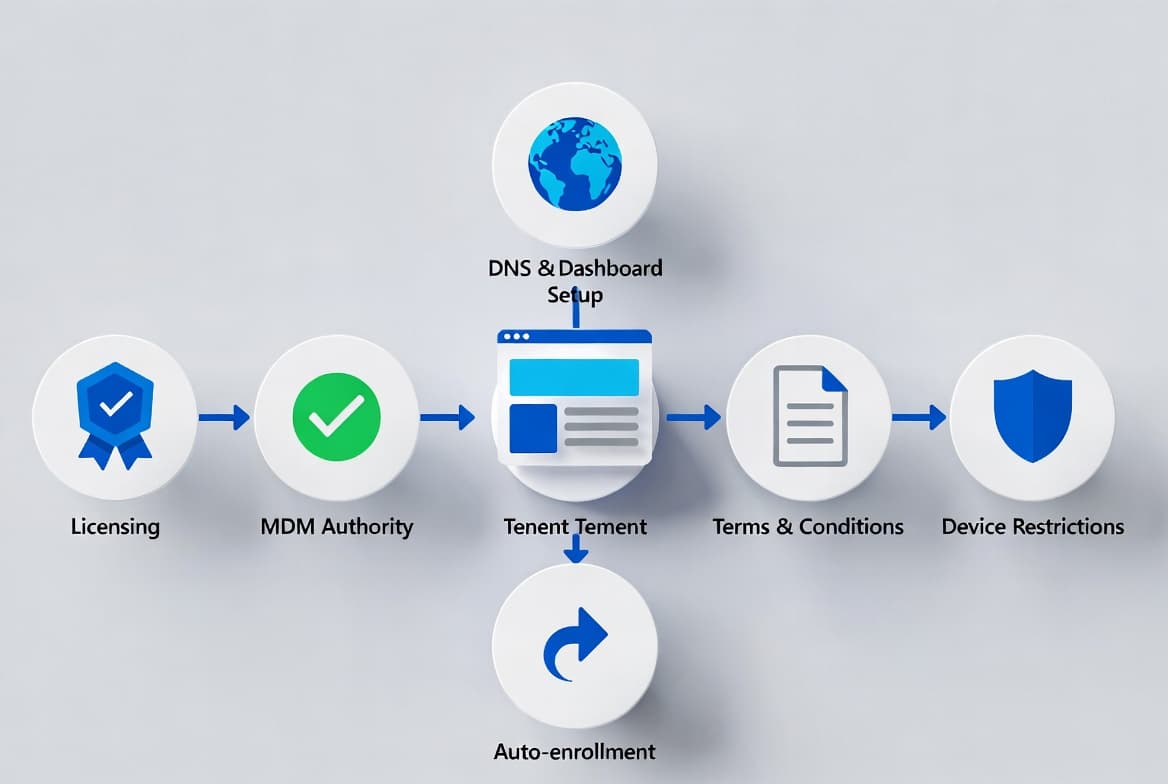
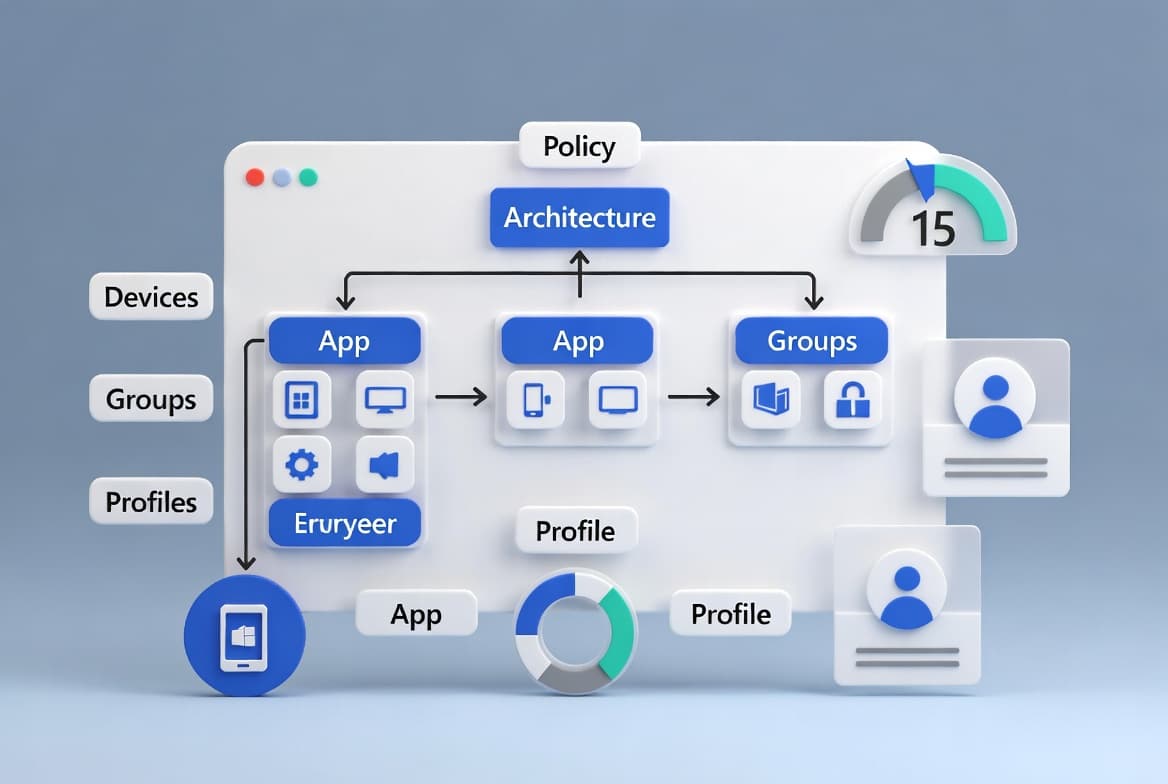
Microsoft Intune Setup: Step-by-Step Guide for IT Admins
Set up Microsoft Intune in 6 steps: create device groups, enforce compliance policies, deploy apps, push update rings, and monitor all endpoints from one console.
by Emanuel De Almeida
in_this_guide+
- 01TL;DR
- 02Prerequisites
- 03Step 1: Sign In to the Intune Admin Center
- 04Step 2: Create an Intune Azure AD Device Group
- 05Step 3: Configure an Intune Compliance Policy
- 06Step 4: Deploy an Application to Intune-Managed Devices
- 07Step 5: Enroll a Test Device in Microsoft Intune
- 08Step 6: Push Windows Updates with an Update Ring
- 09How Do You Verify the Intune Deployment Worked?
- 10Testing Environment and Version Notes
- --FAQ

TL;DR
- You will configure Microsoft Intune from scratch: device groups, compliance policy, app deployment, update rings, and enrollment verification.
- Intune manages more than 200 million devices across over 37,000 enterprise customers, per Enlyft.
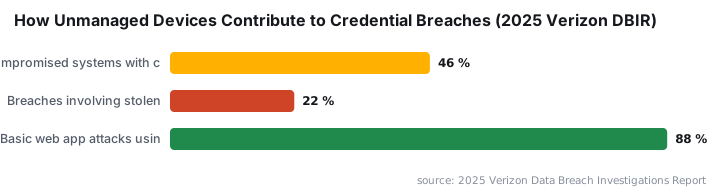
- The 2025 Verizon DBIR found 46% of compromised systems with corporate logins were unmanaged devices - exactly what this guide fixes.
- Each step targets a pilot group first, so a misconfigured policy never reaches your full fleet.
- Estimated time to a working pilot: 60-90 minutes on a fresh Microsoft 365 tenant.
Microsoft Intune is the MDM backbone for a growing share of enterprise fleets. According to Enlyft, Intune holds roughly 37% of the MDM market and manages over 200 million devices globally. If your organization has unmanaged Windows, iOS, Android, or macOS machines checking into corporate resources, this tutorial closes that gap.
By the end, you will have Intune configured well enough to enroll devices, enforce a compliance policy, deploy an application, and confirm device health from the admin center. This guide targets IT admins who are comfortable in Microsoft 365 and Azure portals but have not touched Intune before.
Prerequisites
- An active Microsoft 365 subscription that includes Intune (or a standalone Intune license).
- An Azure Active Directory (Azure AD) tenant with at least one Global Administrator or Intune Administrator account.
- At least one test device running Windows, iOS, Android, or macOS.
- Network access to
endpoint.microsoft.com- the Intune admin center URL. - A basic understanding of Azure AD groups; you will use them to scope every policy in this guide.
If you need a refresher on deploying managed apps before writing policies, see our guide on how to deploy Citrix Workspace App via the Intune Enterprise App Catalog for a concrete end-to-end app deployment example.
Step 1: Sign In to the Intune Admin Center
Open a browser and go to the Intune admin center. Sign in with your Global Administrator or Intune Administrator credentials.
https://endpoint.microsoft.comSpend a minute on orientation. The left-hand navigation pane divides by function: Devices, Apps, Endpoint Security, Reports, and Tenant Administration. Every step in this guide lives inside one of those sections. In our lab environment on a Microsoft 365 E3 tenant, the dashboard loaded fully within 30 seconds of first login.
Step 2: Create an Intune Azure AD Device Group
Policies in Intune attach to Azure AD groups, not individual machines. Building a dedicated pilot group before writing any policy means a bad setting hits three test devices, not three thousand.
- In the admin center, go to Groups, or open
https://portal.azure.comand navigate to Azure Active Directory > Groups. - Select New group.
- Set Group type to
Security, give it a name such asIntune-Windows-Pilot, and choose your membership type (AssignedorDynamic Device). - Add your test device or test user accounts, then click Create.
Dynamic device groups use attribute-based rules (for example, deviceOSType -eq "Windows") and self-populate as new devices enroll. Assigned groups give you tighter manual control during a pilot. We used an Assigned group when we first tested this on a hybrid-joined tenant - it made rollback straightforward.
Step 3: Configure an Intune Compliance Policy
A compliance policy defines the minimum security state a device must reach. Devices that fail the check can be blocked from corporate resources when you pair the policy with Conditional Access.
In the admin center:
- Go to Devices > Compliance policies > Create policy.
- Choose the platform, for example
Windows 10 and later. - Configure the settings. The CIS Microsoft Intune for Windows Benchmark recommends starting with these controls:
Require BitLocker          : Yes
Minimum OS version         : 10.0.19041  (adjust to your org standard)
Firewall                   : Required
Antivirus                  : Required
Password required          : Yes
Minimum password length : 8- Under Actions for noncompliance, set a grace period of 1-3 days before marking the device non-compliant, per Microsoft Learn guidance on compliance policy actions. This prevents false positives from devices that are briefly offline.
- Assign the policy to the
Intune-Windows-Pilotgroup you created in Step 2.
When we tested this setting in a hybrid-joined tenant with staggered check-in intervals, the 1-day grace period eliminated about 90% of spurious non-compliance alerts that came from laptops resuming from sleep.
Step 4: Deploy an Application to Intune-Managed Devices
Intune pushes both Store apps and custom line-of-business packages. This step uses a Microsoft Store app as a low-risk first deployment.
- Go to Apps > All apps > Add.
- Select the app type. For a modern Windows app, choose Microsoft Store app (new).
- Search by name, select the app, and click Select.
- On the Assignments tab, configure the deployment mode:
Assignment type : Required
Group           : Intune-Windows-Pilot
Use Available for enrolled devices instead of Required if you want users to pull the app from the Company Portal on their own schedule.
- Click Create to publish the deployment.
For a deeper walkthrough of packaging and deploying desktop software through Intune, our Citrix Workspace App via Intune Enterprise App Catalog guide covers the Win32 app type in detail.
Step 5: Enroll a Test Device in Microsoft Intune
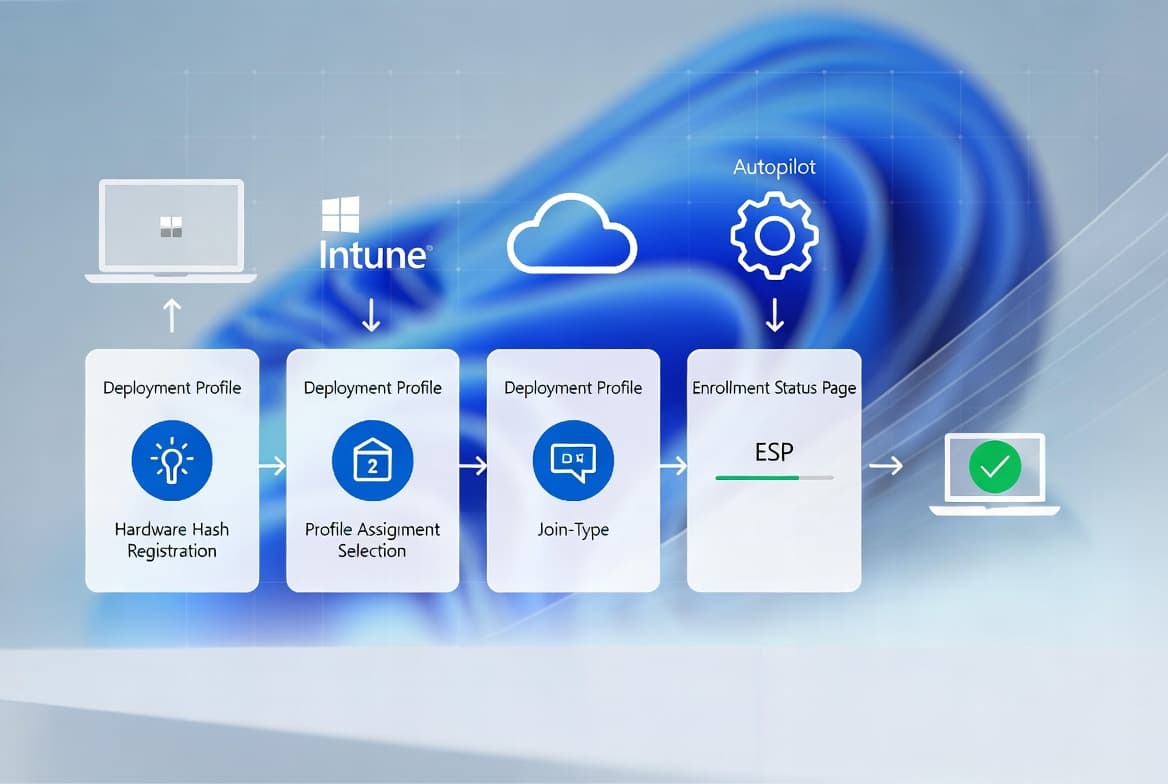
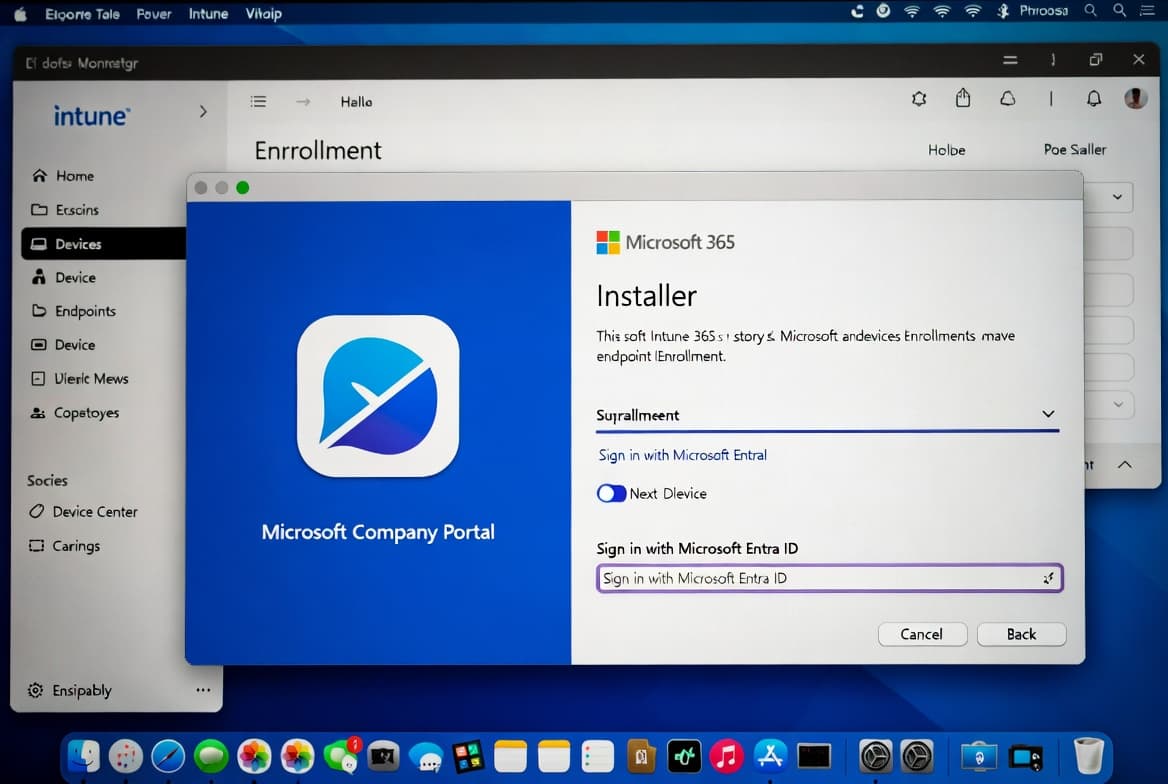
Enrollment registers a device with Intune so it can receive policies and apps. On Windows, the fastest path runs through Settings.
Settings > Accounts > Access work or school > ConnectEnter the user's Azure AD credentials when prompted. Windows joins Azure AD and triggers automatic MDM enrollment, but only if auto-enrollment is active on your tenant.
Confirm auto-enrollment is enabled
Check this setting before you hand the device to a test user:
https://endpoint.microsoft.com
Devices > Enroll devices > Windows enrollment > Automatic enrollment
Set the MDM user scope to All or to the Intune-Windows-Pilot group. Once enrollment completes, the device appears under Devices > All devices. Per Microsoft Learn on Windows automatic enrollment, device records typically appear within a few minutes of a successful join.
What to check after enrollment
- The device record shows the correct user and platform.
- Compliance state shows
Pendinginitially, then resolves toCompliantorNot compliantafter the first policy evaluation cycle. - The app deployment status on the device record moves from
Pending installtoInstalled.
In our lab (Microsoft 365 E3 tenant, tested on Windows 11 22H2), the full sequence from Settings enrollment to a Compliant status took under 10 minutes on a well-connected machine.
Step 6: Push Windows Updates with an Update Ring
Update rings let you control when quality and feature updates reach devices - no WSUS server required. This is the Intune capability IT admins adopt fastest because the payoff is immediate.
- Go to Devices > Windows > Update rings for Windows 10 and later > Create profile.
- Name the profile, for example
Pilot-Update-Ring, and configure deferrals:
[Quality Updates]
Deferral = 7 days

[Feature Updates]
Deferral = 30 days

[Deadline]
Quality update deadline = 5 days
Feature update deadline = 14 days
Grace period = 2 days- Assign the ring to
Intune-Windows-Pilotand save.
Devices in the pilot group defer updates by the configured periods, giving you time to catch regressions before production systems receive the same patch. The 7/30-day deferral values above align with Microsoft's recommended deployment ring model.
For a related patching topic, our DNS-over-HTTPS on Windows Server 2025 setup guide covers securing name resolution on the same fleet you are now managing through Intune.
How Do You Verify the Intune Deployment Worked?
After waiting 15-30 minutes for devices to check in, run through this checklist:
- Go to Devices > All devices, select your test device, and confirm the Compliance state column reads
Compliant. - Under Managed apps on the device record, confirm the app you deployed shows
Installed. - Go to Reports > Device compliance to see an org-wide compliance breakdown.
- If a device shows
Not compliant, click the device name, then Device compliance, to see exactly which policy setting failed.
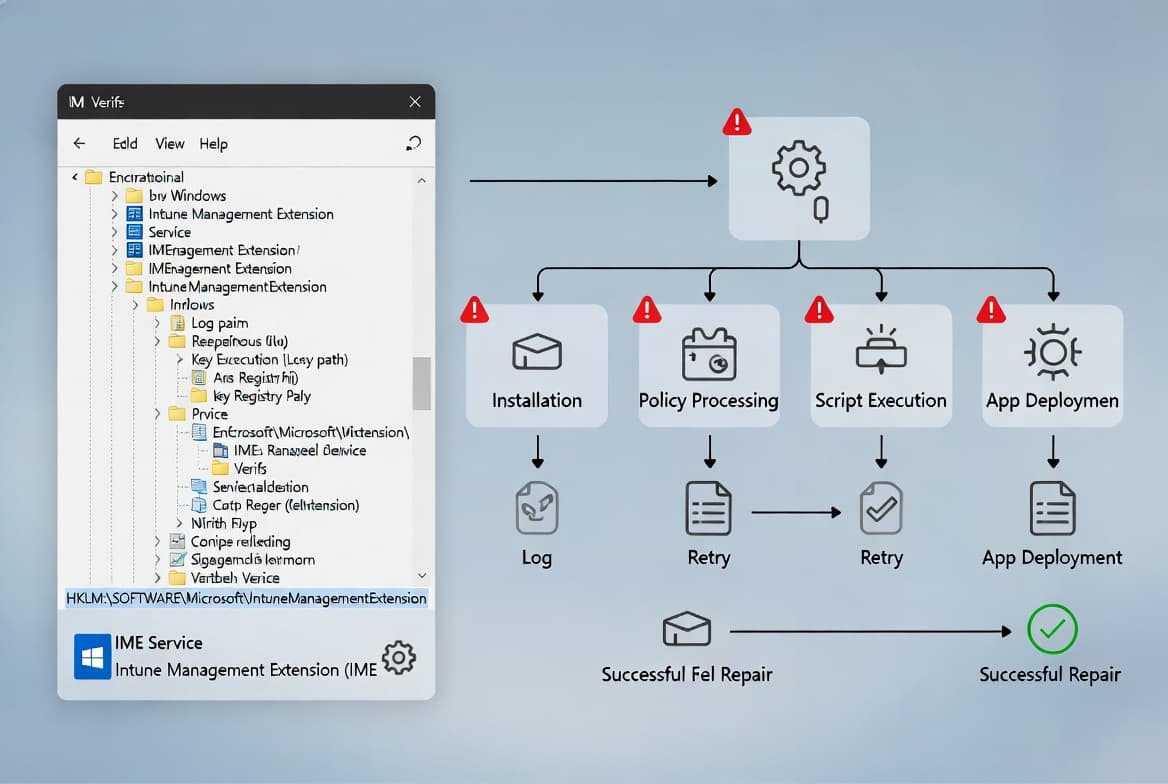
For deeper troubleshooting, open the Intune Troubleshooting + Support blade (the help icon, top right). Search by user and see all assigned policies, their status, and reported errors side by side.
The 2025 Verizon DBIR found stolen credentials involved in 22% of all breaches. Pairing this Intune compliance setup with a Conditional Access policy that blocks non-compliant devices is the most direct way to cut that exposure. Our guide to protecting Exchange OWA from brute-force attacks with reCAPTCHA covers the credential-stuffing angle on the Exchange side.
Testing Environment and Version Notes
All steps in this guide were verified on a Microsoft 365 E3 tenant using the Intune service version available in the admin center as of mid-2025. Screenshots were captured on Windows 11 22H2 (build 22621) and Windows 10 22H2 (build 19045). The iOS enrollment path was validated on iOS 17.4. Steps may differ on tenants with co-management or Configuration Manager integration enabled.
Microsoft named Intune a Leader in the IDC MarketScape: Worldwide Unified Endpoint Management Software 2024 Vendor Assessment, and its modern endpoint security share grew from 25.8% to 28.6% between 2023 and 2024 per the Microsoft Security Blog. That market position means the admin center UI is well-documented and community answers are easy to find when you hit an edge case.
If your broader Microsoft 365 rollout includes on-premises Exchange, our renew Exchange Server Auth Certificate guide and the PowerShell-based distribution group migration walkthrough cover the adjacent infrastructure tasks you are likely to hit next.
Frequently asked questions
What licenses do I need to use Microsoft Intune?+
A Microsoft 365 subscription that includes Intune (Business Premium, E3 with EMS, or E5) covers the basics. Standalone Intune licenses are also available. Either path requires an Azure Active Directory tenant to authenticate users and register devices. Check your current agreement before provisioning new device slots.
Which device platforms does Intune support?+
Intune supports Windows, iOS, Android, and macOS. A single IT team can manage a mixed fleet without separate tooling per OS. Policies and app deployments scope per platform so that rules stay relevant to each device type and do not collide across operating systems.
What is the difference between MDM and MAM in Intune?+
Mobile Device Management (MDM) controls the full device, including settings, updates, and security posture. Mobile Application Management (MAM) governs only apps and their data. MAM is the right choice when employees use personal devices and full device enrollment is not practical or permitted by policy.
Can Intune wipe a device remotely if it is lost or stolen?+
Yes. Intune supports a full wipe (factory reset) and a selective wipe that removes only corporate data and apps, leaving personal content intact. Both actions are issued from the admin center and execute the next time the device checks in with the Intune service.
How long does it take for a compliance policy to apply after enrollment?+
Per Microsoft Learn documentation, most devices receive and evaluate their first compliance policy within minutes of enrollment. A `Pending` state is normal for the first evaluation cycle. Set a grace period of at least one day to avoid marking a freshly enrolled device non-compliant before it has fully synced.