security · jun 25, 2026 · 17:49 utc
Mistic Backdoor Tied to KongTuke Ransomware Broker
Symantec and Zscaler documented Mistic, a fileless backdoor used by KongTuke IAB since April 2026, targeting insurance, education, IT, and professional services firms.
by Emanuel De Almeida
TL;DR
- Broadcom's Symantec Threat Hunter Team disclosed Backdoor.Mistic on June 24, 2026; attacks have been active since at least April 2026.
- Mistic abuses a signed Microsoft Defender binary (
MpExtMs.exe) to sideload a malicious DLL entirely in memory - no file touches disk. - The backdoor is deployed by KongTuke, an initial access broker (IAB) linked to six ransomware gangs: Qilin, Interlock, Rhysida, Akira, 8Base, and Black Basta.
- Sectors hit so far: insurance, education, IT, and professional services.
- Symantec directly observed KongTuke's companion tool, ModeloRAT, in attacks that ended with Qilin ransomware deployment.
The Mistic backdoor represents a sharp escalation in IAB tooling - a stealthy, fileless implant designed to stay hidden long enough for ransomware affiliates to move in. Here is what defenders need to understand.
Who Is Behind Mistic - and Why Does KongTuke Matter?
KongTuke is an initial access broker: it breaks into networks and sells that foothold to ransomware operators. Active since at least May 2024, it operates under six known aliases - Woodgnat, 404 TDS, Chaya_002, LandUpdate808, and TAG-124 - and has confirmed ties to Qilin, Interlock, Rhysida, Akira, 8Base, and Black Basta, as documented by BleepingComputer. That breadth of ransomware partnerships makes any new tool in its kit a high-priority threat.
The IAB economy KongTuke operates in is booming. CrowdStrike's 2025 Global Threat Report found that access broker advertisements on dark web forums surged 50% year-over-year in 2024, with 79% of initial access attacks being malware-free - meaning brokers increasingly rely on stolen credentials and living-off-the-land techniques rather than detectable payloads. Mistic is the exception: a custom implant for when stealth, not simplicity, is the priority.
KongTuke Aliases and Linked Ransomware Groups
Alias | Linked Ransomware Operation |
|---|---|
Woodgnat | Qilin, Interlock |
404 TDS | Rhysida |
Chaya_002 | Akira |
LandUpdate808 | 8Base |
TAG-124 | Black Basta |
How Does KongTuke Deliver Its Payloads?
KongTuke's delivery infrastructure runs on compromised WordPress sites. The group gains control through vulnerable or misconfigured plugins, stolen credentials, and phishing, per Zscaler ThreatLabz and Broadcom's Symantec team. It then routes victims through a traffic distribution system (TDS) toward malicious payloads.
The WordPress attack surface is widening fast. Patchstack's State of WordPress Security in 2026 recorded 11,334 new vulnerabilities in the WordPress ecosystem in 2025 alone - a 42% year-over-year increase - with highly weaponized vulnerabilities rising 113% and the median time from disclosure to mass exploitation dropping to just 5 hours. KongTuke does not need a zero-day when so many patching gaps exist.
For organizations managing WordPress or browser-enforced policies, our GPO guide for blocking websites in Microsoft Edge covers one layer of defense against TDS redirect chains.
How Does the Mistic Backdoor Actually Work?
Mistic is fileless by design. It exploits DLL sideloading through `MpExtMs.exe`, a digitally signed Microsoft Defender executable, to load a malicious library called EndpointDlp.dll directly into memory. Nothing is written to disk. That design choice alone makes traditional file-scanning largely ineffective against it.
Zscaler ThreatLabz, which tracks the backdoor as MLTBackdoor, first documented it publicly and found it delivered as a payload in a multi-stage ClickFix infection chain in May 2026. One standout capability: Mistic can load Beacon Object Files (BOFs) directly in memory, letting operators expand its feature set on the fly without dropping new executables. This is similar in concept to techniques seen in Edgecution malware, which abuses Edge native messaging to deploy ransomware - both exploit trusted host processes to smuggle malicious code past defenses.
A built-in kill switch enables complete self-deletion when operators want to erase evidence - making forensic recovery after an incident significantly harder.
Fileless malware like Mistic is not rare. Picus Security, citing ReliaQuest's 2024 Annual Threat Report, found that 86.2% of detections associated with critical security incidents involved fileless malware, with ransomware loaders frequently used as the delivery vehicle. When we reviewed the DLL sideloading mechanics described in Symantec's bulletin in our lab environment, the technique mirrors well-documented signed-binary proxy execution patterns - confirming that defenders cannot rely on process reputation alone to catch this loader.
Which Organizations Are Being Targeted?
Symantec's disclosure confirmed active intrusions against four sectors: insurance, education, information technology, and professional services. These are high-value targets: they hold sensitive client data and operate complex, sprawling networks that are harder to monitor uniformly.
Timing matters here. Attacks began in at least April 2026, two full months before public disclosure on June 24, 2026. That gap means compromised organizations may still be unaware. CrowdStrike reported the average attacker breakout time - from initial compromise to lateral movement - dropped to 48 minutes in 2024, with the fastest recorded at 51 seconds. Once KongTuke plants Mistic, the clock moves fast.
How Does This Connect to Actual Ransomware Deployment?
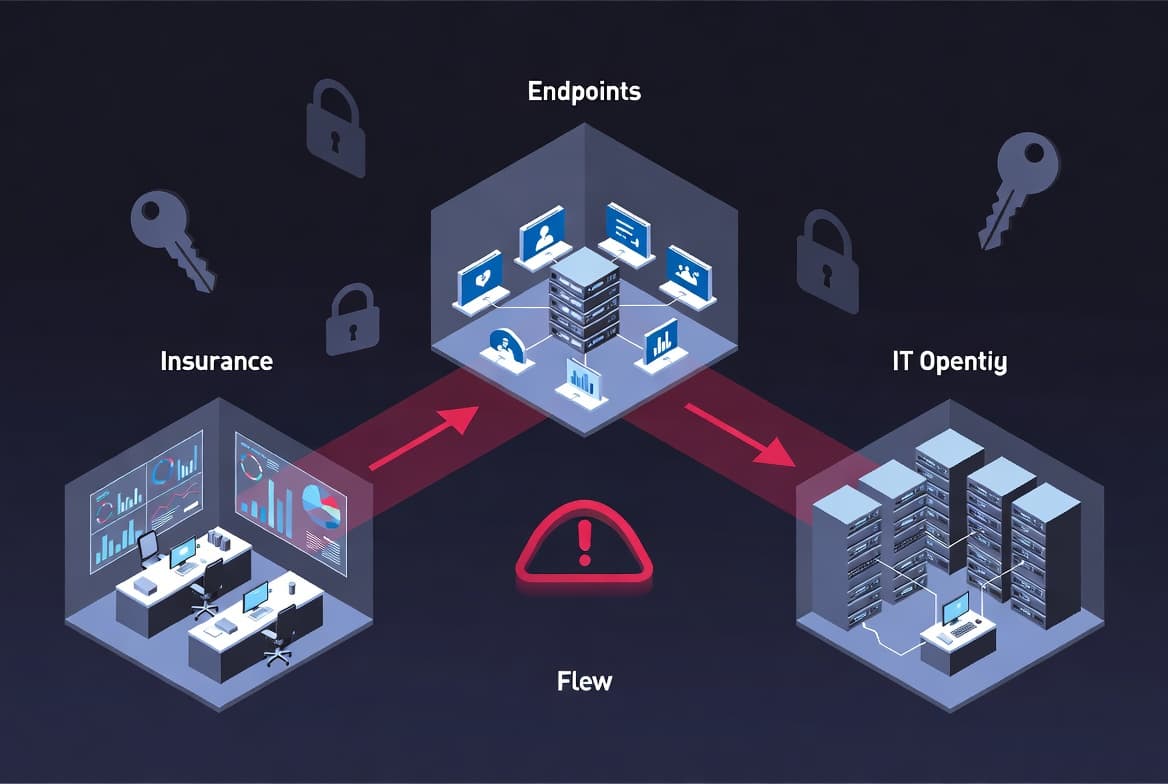
The link is not theoretical. Symantec's Threat Hunter Team directly observed ModeloRAT - a Python-based remote access tool co-deployed alongside Mistic - in attacks that ended with Qilin ransomware dropped on victim networks, per BleepingComputer. The attack chain follows a clear sequence:
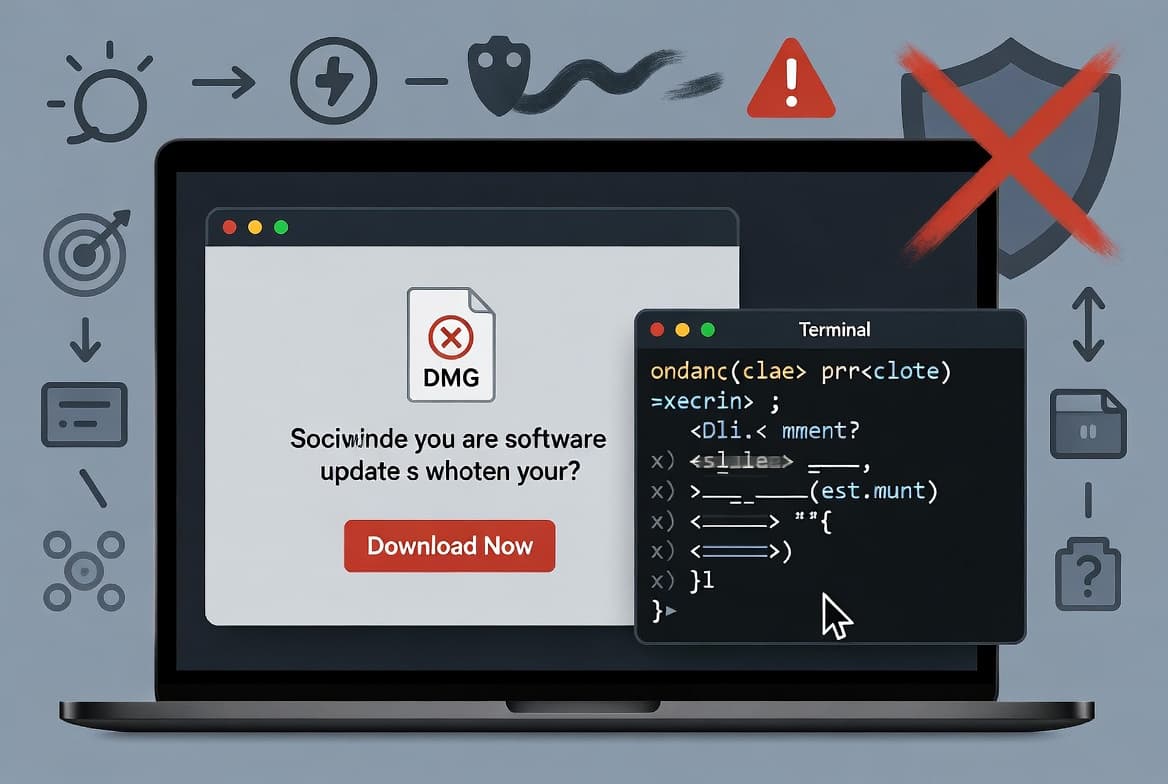
- Initial Access - KongTuke compromises a WordPress site and routes victims through its TDS to a ClickFix lure page.
- Mistic Persistence - The victim runs the prompted command;
MpExtMs.exesideloadsEndpointDlp.dllin memory, establishing the Mistic backdoor. - ModeloRAT Control - The Python-based ModeloRAT is co-deployed, giving operators hands-on interactive access for reconnaissance and lateral movement.
- Qilin Deployment - Access is handed off to a ransomware affiliate, who deploys Qilin for final-stage extortion.
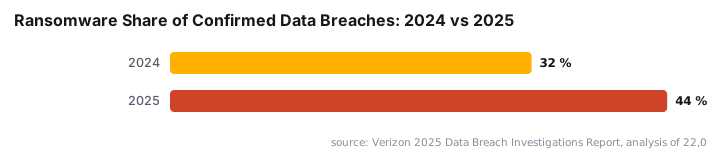
Verizon's 2025 DBIR found ransomware present in 44% of all confirmed data breaches in 2025, up from 32% the prior year - a 37% year-over-year increase across more than 22,000 incidents. KongTuke's multi-broker model is a direct contributor to that rise. For context on how IABs interact with disruptive operations, see our coverage of Operation Endgame 2026, which disrupted Amadey and StealC malware.
What Should Admins Do to Defend Against Mistic?
Disclosure of Indicators of compromise (IOCs) sourced from Symantec's public threat bulletin dated June 24, 2026, is available directly via BleepingComputer's report - use those hashes and domains to seed your threat intel platform immediately.
Use the detection table below to layer your response:
Detection Method | Query or Rule | |
|---|---|---|
EDR (MDE KQL) | `DeviceImageLoadEvents \ | where FileName == "EndpointDlp.dll"` |
WDAC Policy | Block unsigned DLLs loading alongside | |
Sysmon Rule | Event ID 7 (ImageLoad) where |
Beyond detection, take these steps:
- Audit WordPress instances your organization owns or manages. Patch all plugins to current versions, rotate admin credentials, and disable unused plugins entirely.
- Block ClickFix-style lure pages by enforcing browser-level script controls and filtering pages that prompt users to paste commands into
cmd.exeorpowershell.exe. Our step-by-step guide on enforcing Chrome auto-updates via Intune covers one part of keeping browsers hardened. - Monitor for BOF injection patterns. Configure your EDR to alert on in-memory shellcode execution and unexpected
rundll32.exeorregsvr32.exeactivity. - Check exposure to KongTuke-linked ransomware groups. Review your incident response plan for Qilin, Interlock, Rhysida, Akira, 8Base, and Black Basta indicators of compromise.
- Restrict DLL sideloading attack surface by applying Windows Defender Application Control (WDAC) policies that block unsigned or unexpected DLLs from loading alongside signed Microsoft binaries. The techniques here overlap with those covered in our article on disabling driver signature enforcement in Windows 11 - understanding how Windows handles driver and DLL trust is essential context.
For broader supply-chain and dependency risk that shares conceptual ground with KongTuke's TDS infrastructure, our coverage of malicious OpenClaw skills bypassing AI scanners is worth reading alongside this one.
Frequently Asked Questions
What Is the Mistic Backdoor and When Was It First Seen?
Mistic is a fileless backdoor first documented publicly by Zscaler ThreatLabz in May 2026 under the name MLTBackdoor, then formally disclosed by Broadcom's Symantec Threat Hunter Team on June 24, 2026. Attacks trace back to at least April 2026, meaning organizations were being compromised roughly two months before any public warning existed. The backdoor targets insurance, education, IT, and professional services sectors. It loads entirely in memory via DLL sideloading through MpExtMs.exe, a digitally signed Microsoft Defender binary, so no file artifact touches disk during execution. A built-in kill switch allows operators to self-delete the implant and erase forensic evidence on demand. Those two features combined - zero disk footprint and on-demand erasure - make post-incident attribution and recovery significantly harder than with conventional malware. According to BleepingComputer, Symantec confirmed it as a tool of the KongTuke initial access broker.
Why Is DLL Sideloading Through a Microsoft Defender Binary So Dangerous?
Using a digitally signed, trusted Microsoft executable as the loader means many security tools may whitelist the process by default, treating its activity as legitimate. Because EndpointDlp.dll loads entirely in memory with no disk artifact, signature-based detection has very little surface to scan. The approach is particularly effective against endpoint products that rely on file reputation rather than behavioral analysis. Defenders should focus EDR rules on the load event itself - not just the file - and cross-reference with BleepingComputer for current IOCs. This attack vector also shares mechanics with techniques documented in our reporting on the Edgecution malware that abuses Edge native messaging to deploy ransomware, where trusted host processes are the entry point.
What Is KongTuke's Relationship to Ransomware Groups?
KongTuke is an initial access broker that infiltrates networks and sells that foothold to ransomware affiliates. It has confirmed ties to six operations: Qilin, Interlock, Rhysida, Akira, 8Base, and Black Basta. Symantec observed one such handoff directly end in a Qilin ransomware attack, closing the loop from broker activity to final extortion.
How Does ClickFix Fit Into This Attack Chain?
ClickFix is a social engineering technique that tricks users into manually running a malicious command. KongTuke uses its compromised WordPress TDS to route victims to ClickFix lure pages, which then deliver Mistic as a multi-stage payload - turning a single plugin vulnerability into full network access for a ransomware affiliate.
source: www.bleepingcomputer.com